



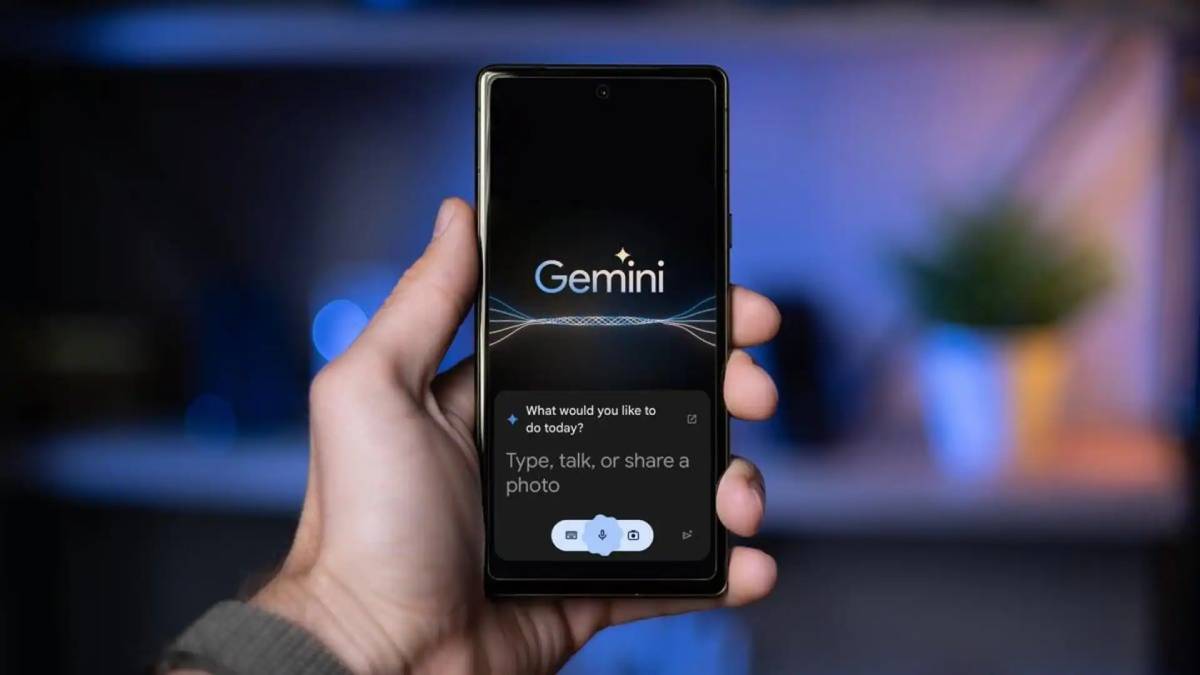
A significant product update from Google signals a renewed push for real-time AI utility as the company introduces the ‘Answer Now’ feature in its Gemini app. The move sharpens competition in consumer AI, targeting faster responses and redefining user expectations across productivity, search, and digital assistants.
Google has introduced ‘Answer Now’, a feature designed to deliver instant, concise responses in the Google Gemini app without requiring extended prompts or conversational back-and-forth. The update prioritises speed and efficiency, positioning Gemini as a more practical, on-the-go assistant for everyday queries.
The rollout reflects Google’s broader strategy to tighten latency, improve user experience, and retain engagement amid intensifying competition from rival AI platforms. Key stakeholders include consumers, enterprise users integrating Gemini into workflows, and developers building on Google’s AI ecosystem. From a market perspective, the feature underscores Google’s intent to defend its dominance in search-adjacent AI interactions.
The development aligns with a broader trend across global markets where AI leaders are shifting focus from capability expansion to usability and performance optimisation. Over the past year, generative AI tools have rapidly improved in reasoning and creativity, but users increasingly demand speed, reliability, and relevance.
Google faces mounting pressure as AI assistants begin to replace traditional search behaviours. Competitors such as OpenAI, Apple, and Microsoft are embedding AI deeper into operating systems and productivity software, raising the stakes for real-time responsiveness. Historically, Google’s leadership has been built on fast, accurate information retrieval. ‘Answer Now’ reflects an effort to translate that legacy advantage into the generative AI era, where milliseconds and clarity can determine user loyalty.
Technology analysts view ‘Answer Now’ as a strategic recalibration rather than a headline-grabbing breakthrough. One AI product strategist notes that faster responses are critical to habit formation, especially for mobile users who expect immediate value.
Industry observers suggest Google is responding to feedback that generative AI interactions can feel slow or overly verbose. By streamlining replies, Gemini positions itself closer to a utility tool than a conversational novelty.
While Google has framed the update as a user-centric enhancement, experts highlight that such features also reduce computational costs by limiting extended responses. From an enterprise lens, faster outputs may improve adoption in customer support, sales enablement, and internal knowledge systems, where speed often outweighs depth.
For businesses, the move signals a shift toward AI tools optimised for execution rather than experimentation. Companies leveraging Gemini for workflows may see productivity gains through quicker decision support and reduced interaction time.
For investors, the update reinforces Google’s commitment to defending its AI ecosystem against rivals reshaping digital discovery. Policymakers and regulators are less directly impacted, but the growing reliance on instant AI responses raises broader questions around accuracy, accountability, and information quality. As AI becomes more embedded in real-time decision-making, scrutiny over transparency and safeguards is likely to intensify.
Looking ahead, decision-makers should watch whether ‘Answer Now’ expands beyond basic queries into enterprise and multimodal use cases. The next phase of competition will centre on who delivers the fastest, most trusted AI at scale. While feature parity across AI assistants is narrowing, execution speed and integration depth may define long-term winners in the global AI race.
Source & Date
Source: NewsBytes
Date: January 2026


