



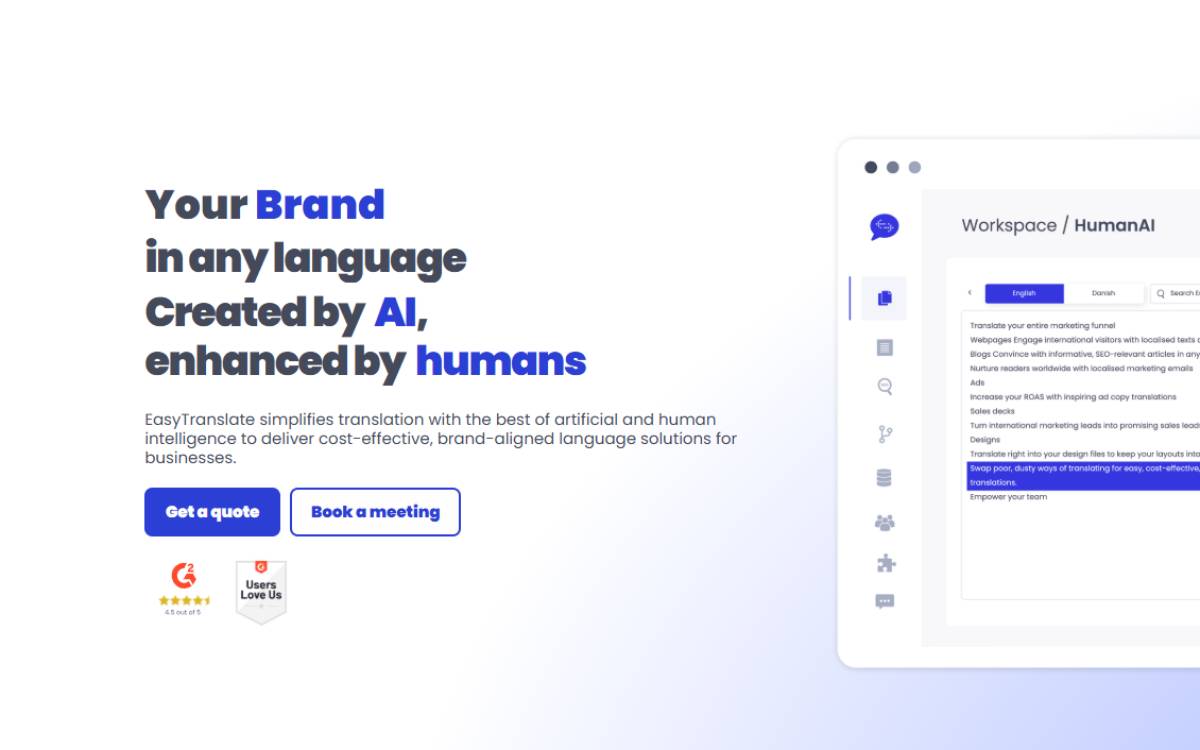
A major consolidation move is reshaping Europe’s AI-powered language technology sector as EasyTranslate expands its Nordic footprint through acquisition. The company’s strategy highlights a growing race among technology firms to build AI-driven translation ecosystems that combine automation, linguistic expertise, and enterprise services for global businesses operating across multiple markets.
EasyTranslate is strengthening its position in the Nordic AI landscape by acquiring Translated, expanding its capabilities in AI-powered translation and language services. The move reflects a broader strategy of building a larger technology platform through targeted acquisitions.
The company aims to combine AI automation with professional language expertise to serve enterprises requiring accurate multilingual communication. The transaction positions EasyTranslate among European companies seeking scale in the rapidly evolving AI services market.
The acquisition is expected to support product expansion, improve technological capabilities, and increase competitiveness as businesses accelerate digital transformation and global operations.
The translation industry is undergoing significant disruption as artificial intelligence transforms how organisations manage multilingual communication. Traditional translation providers are increasingly integrating machine learning, large language models, and automation tools to improve speed, accuracy, and scalability.
European companies face growing demand for localisation services as businesses expand internationally and operate across diverse linguistic markets. Nordic technology companies, known for strong digital adoption and innovation ecosystems, are increasingly exploring AI-focused growth strategies.
EasyTranslate’s acquisition approach reflects a wider trend where technology firms are building AI capabilities through consolidation rather than developing every solution internally. Similar strategies are emerging across enterprise software, cybersecurity, and data infrastructure markets, where companies are combining specialised expertise with AI innovation to compete globally.
Industry analysts suggest that AI will not eliminate the need for language technology providers but will transform their role. Companies that successfully combine artificial intelligence with human expertise may gain an advantage in delivering high-quality communication solutions for complex industries.
Investors are increasingly watching AI-enabled service companies as they move beyond simple automation toward specialised enterprise applications. The EasyTranslate expansion demonstrates confidence that language technology remains a valuable market as global businesses become more interconnected.
Experts note that challenges remain, including maintaining translation accuracy, protecting sensitive business information, and adapting AI systems to cultural differences. Companies operating in regulated industries will require solutions that balance efficiency with reliability and compliance.
For multinational organisations, AI-powered translation platforms could significantly improve international communication, customer engagement, and operational efficiency. Businesses may increasingly adopt automated language solutions to support global expansion while reducing costs.
Investors may view EasyTranslate’s acquisition strategy as part of a larger opportunity within European AI services, where specialised platforms can compete against larger global technology providers.
From a policy perspective, the growth of AI language technologies raises important discussions around data privacy, intellectual property, and cultural accuracy. European regulators may continue developing frameworks to ensure responsible AI deployment while supporting innovation within the region’s technology ecosystem.
EasyTranslate’s expansion signals that the future of language technology will likely be shaped by AI-powered platforms with strong enterprise capabilities. As global businesses demand faster and smarter communication tools, companies that successfully integrate automation with human expertise could become key players. The next phase of competition will depend on technological innovation, market expansion, and the ability to deliver trusted AI solutions at scale.
Source: Nordic Tech News
Date: July 2026


