
Faraday Future Launches Embodied AI Platform

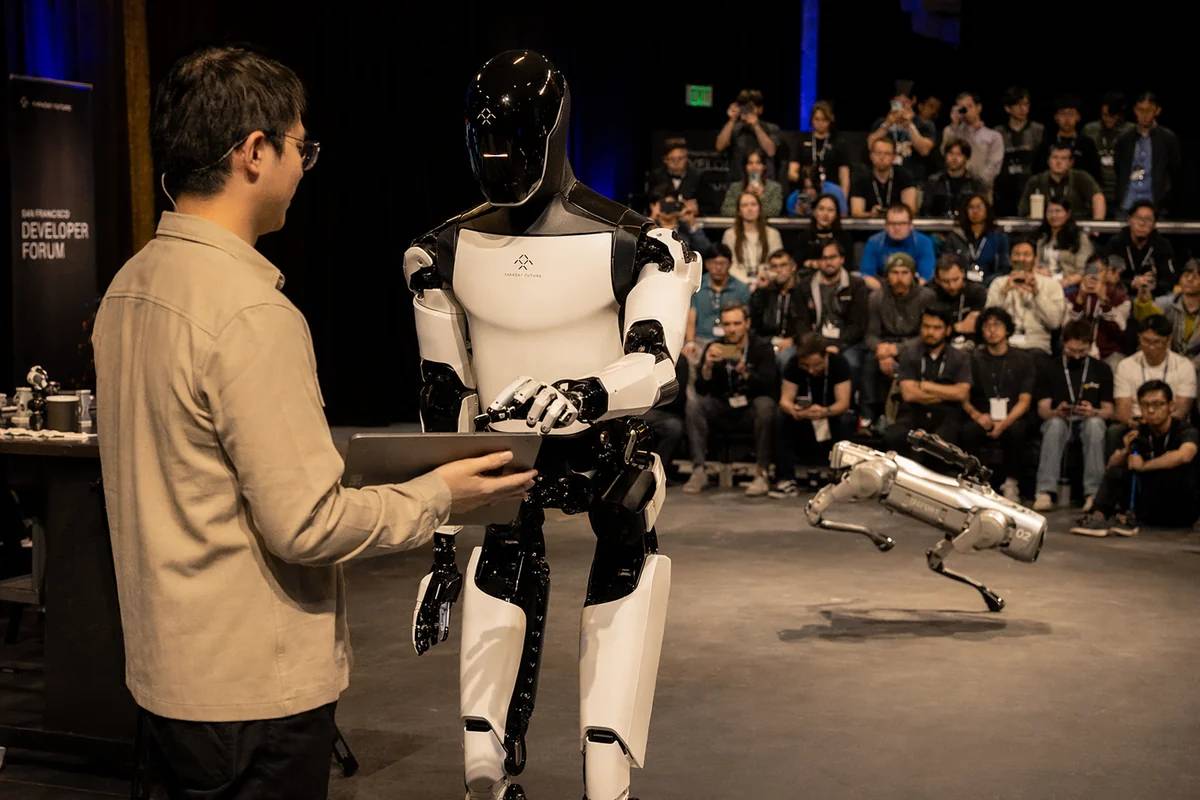
Faraday Future announced the launch of its embodied AI (EAI) developer platform, designed to support developers building AI-native applications for robotics and intelligent systems.

April 28, 2026
|

Faraday Future has introduced a new embodied AI developer platform aimed at advancing AI-native robotics and education. The initiative signals a strategic expansion beyond electric vehicles into intelligent systems, with implications for mobility, automation, and the emerging intersection of AI robotics, and developer ecosystems.

Faraday Future announced the launch of its embodied AI (EAI) developer platform, designed to support developers building AI-native applications for robotics and intelligent systems. The company has also designated 2026 as the inaugural year of EAI robotics education, signaling a long-term commitment to ecosystem development.

The platform aims to integrate AI, software, and hardware capabilities, enabling developers to create applications that interact with physical environments. Faraday Future is positioning this initiative as an extension of its broader technology strategy, leveraging its experience in intelligent mobility.

The move highlights the company’s effort to diversify beyond electric vehicles and participate in the rapidly evolving AI and robotics landscape. The development aligns with a broader trend across global markets where embodied AI systems that integrate intelligence with physical action is gaining traction. Unlike traditional software-based AI, embodied AI operates in real-world environments, powering robotics, autonomous systems, and smart devices.

Major technology companies and startups are increasingly investing in this space, recognizing its potential to transform industries such as manufacturing, logistics, healthcare, and mobility. The convergence of AI and robotics is also being supported by advances in sensors, compute power, and machine learning models.

Faraday Future’s entry into this domain reflects a strategic pivot seen across the automotive sector, where companies are evolving into broader mobility and technology platforms. This shift is driven by the need to capture value beyond vehicle manufacturing and participate in next-generation intelligent ecosystems.

Industry analysts view the launch as a signal that traditional automotive players are expanding into adjacent technology domains to remain competitive. By introducing a developer platform, Faraday Future is attempting to build an ecosystem rather than just products.

Experts suggest that success in embodied AI will depend on the ability to integrate hardware, software, and developer communities effectively. Platforms that enable experimentation and rapid prototyping could accelerate innovation in robotics applications.

From a strategic perspective, positioning 2026 as a foundational year for robotics education indicates an effort to shape the talent pipeline and influence industry standards early. Analysts also note that such initiatives could enhance brand positioning, even as the company continues to navigate challenges in its core EV business.

For businesses, the move underscores the growing importance of robotics and embodied AI as drivers of future productivity and automation. Companies across sectors may need to explore how intelligent systems can be integrated into operations.

Investors could view the initiative as part of a broader trend toward platform-based strategies in AI and robotics, though execution risks remain. Meanwhile, policymakers may need to consider frameworks for robotics education, workforce transition, and safety standards.

For global executives, the development highlights a shift where competitive advantage increasingly depends on ecosystem participation rather than standalone products. Looking ahead, the platform’s adoption by developers and integration into real-world applications will be key indicators of success. Stakeholders will also monitor how effectively Faraday Future builds partnerships and scales its ecosystem.

Decision-makers should watch the evolution of embodied AI as a critical frontier in technology. As robotics and AI converge, early ecosystem builders could play a defining role in shaping the next phase of industrial and digital transformation.

Source: Faraday Future Press Release
Date: April 2026

  • Featured tools
Neuron AI
Free

Neuron AI is an AI-driven content optimization platform that helps creators produce SEO-friendly content by combining semantic SEO, competitor analysis, and AI-assisted writing workflows.

#
SEO
Learn more
Ai Fiesta
Paid

AI Fiesta is an all-in-one productivity platform that gives users access to multiple leading AI models through a single interface. It includes features like prompt enhancement, image generation, audio transcription and side-by-side model comparison.

#
Copywriting
#
Art Generator
Learn more

Learn more about future of AI

Join 80,000+ Ai enthusiast getting weekly updates on exciting AI tools.
Thank you! Your submission has been received!
Oops! Something went wrong while submitting the form.

Faraday Future Launches Embodied AI Platform

April 28, 2026

Faraday Future announced the launch of its embodied AI (EAI) developer platform, designed to support developers building AI-native applications for robotics and intelligent systems.

Faraday Future has introduced a new embodied AI developer platform aimed at advancing AI-native robotics and education. The initiative signals a strategic expansion beyond electric vehicles into intelligent systems, with implications for mobility, automation, and the emerging intersection of AI robotics, and developer ecosystems.

Faraday Future announced the launch of its embodied AI (EAI) developer platform, designed to support developers building AI-native applications for robotics and intelligent systems. The company has also designated 2026 as the inaugural year of EAI robotics education, signaling a long-term commitment to ecosystem development.

The platform aims to integrate AI, software, and hardware capabilities, enabling developers to create applications that interact with physical environments. Faraday Future is positioning this initiative as an extension of its broader technology strategy, leveraging its experience in intelligent mobility.

The move highlights the company’s effort to diversify beyond electric vehicles and participate in the rapidly evolving AI and robotics landscape. The development aligns with a broader trend across global markets where embodied AI systems that integrate intelligence with physical action is gaining traction. Unlike traditional software-based AI, embodied AI operates in real-world environments, powering robotics, autonomous systems, and smart devices.

Major technology companies and startups are increasingly investing in this space, recognizing its potential to transform industries such as manufacturing, logistics, healthcare, and mobility. The convergence of AI and robotics is also being supported by advances in sensors, compute power, and machine learning models.

Faraday Future’s entry into this domain reflects a strategic pivot seen across the automotive sector, where companies are evolving into broader mobility and technology platforms. This shift is driven by the need to capture value beyond vehicle manufacturing and participate in next-generation intelligent ecosystems.

Industry analysts view the launch as a signal that traditional automotive players are expanding into adjacent technology domains to remain competitive. By introducing a developer platform, Faraday Future is attempting to build an ecosystem rather than just products.

Experts suggest that success in embodied AI will depend on the ability to integrate hardware, software, and developer communities effectively. Platforms that enable experimentation and rapid prototyping could accelerate innovation in robotics applications.

From a strategic perspective, positioning 2026 as a foundational year for robotics education indicates an effort to shape the talent pipeline and influence industry standards early. Analysts also note that such initiatives could enhance brand positioning, even as the company continues to navigate challenges in its core EV business.

For businesses, the move underscores the growing importance of robotics and embodied AI as drivers of future productivity and automation. Companies across sectors may need to explore how intelligent systems can be integrated into operations.

Investors could view the initiative as part of a broader trend toward platform-based strategies in AI and robotics, though execution risks remain. Meanwhile, policymakers may need to consider frameworks for robotics education, workforce transition, and safety standards.

For global executives, the development highlights a shift where competitive advantage increasingly depends on ecosystem participation rather than standalone products. Looking ahead, the platform’s adoption by developers and integration into real-world applications will be key indicators of success. Stakeholders will also monitor how effectively Faraday Future builds partnerships and scales its ecosystem.

Decision-makers should watch the evolution of embodied AI as a critical frontier in technology. As robotics and AI converge, early ecosystem builders could play a defining role in shaping the next phase of industrial and digital transformation.

Source: Faraday Future Press Release
Date: April 2026

Promote Your Tool

Copy Embed Code

Similar Blogs

April 28, 2026
|

Amazon Kindle Paperwhite Gets Price Cut Ahead Demand

The latest deal on the Kindle Paperwhite includes a $25 discount, alongside features such as waterproofing and glare-free display technology. The promotion is positioned to capture seasonal demand during the Mother’s Day shopping period.
Read more
April 28, 2026
|

Google I/O 2026 Focuses on AI Platforms

Google I/O 2026 is anticipated to highlight new AI-driven products, updates to developer tools, and expanded capabilities across its AI platforms.
Read more
April 28, 2026
|

Xreal Cuts One Pro Price, Boosting AR Competition

Xreal has permanently reduced the price of its One Pro AR glasses, aiming to improve accessibility and broaden consumer adoption of its augmented reality ecosystem.
Read more
April 28, 2026
|

Canonical Integrates AI into Ubuntu Ecosystem

Canonical has detailed plans to embed AI functionality directly into Ubuntu, focusing on enhancing developer productivity, system automation, and intelligent system management.
Read more
April 28, 2026
|

Google Tests AI Chat Search for YouTube Discovery Shift

Google is experimenting with an AI chatbot integrated into YouTube search, allowing users to ask natural language questions and receive contextual video recommendations.
Read more
April 28, 2026
|

Turtle Beach Launches Touchscreen Gaming Mouse

The new Turtle Beach mouse, part of its Command Series, integrates a built-in touchscreen alongside traditional input controls. The device is designed to offer customizable commands and interface shortcuts for gamers.
Read more