
Google Advances AI Glasses Computing Push

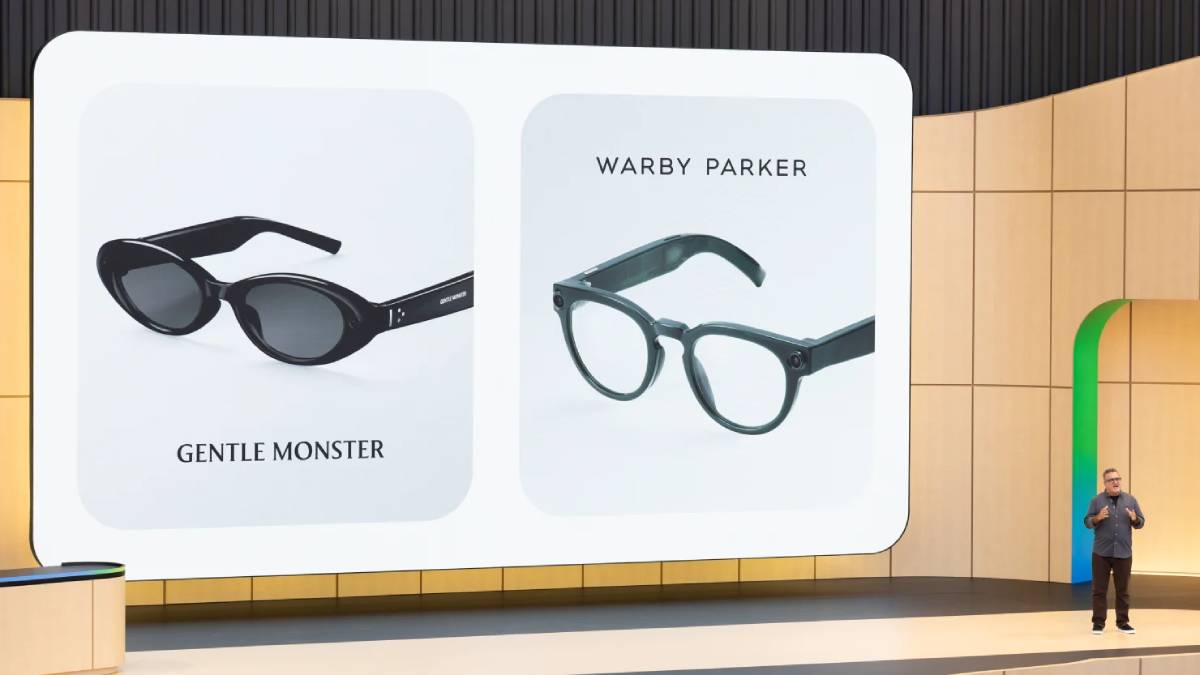
Google showcased an initial look at its new AI-integrated smart glasses during its broader I/O 2026 announcements, highlighting features tied to real-time assistance, contextual computing, and multimodal AI interaction.

May 20, 2026
|
Image Source: CNBC Technology

Google has offered an early preview of its upcoming AI-powered smart glasses ahead of an expected fall launch, signaling renewed ambitions in wearable computing and ambient artificial intelligence. The move places Google back at the center of the emerging AI hardware race as major technology firms compete to define the next generation of connected consumer devices.

Google showcased an initial look at its new AI-integrated smart glasses during its broader I/O 2026 announcements, highlighting features tied to real-time assistance, contextual computing, and multimodal AI interaction. The company indicated the device will launch later this year as part of its expanding AI hardware ecosystem.

The glasses are expected to integrate closely with Google’s AI models and software platforms, enabling hands-free access to search, navigation, translation, and personalized digital assistance. The preview underscores Google’s effort to position AI-powered wearables as a future interface for digital interaction beyond smartphones and traditional computing devices.

The announcement intensifies competition across the rapidly evolving wearable AI and augmented computing market. Google’s renewed push into smart glasses comes more than a decade after the original Google Glass struggled to gain mainstream adoption due to privacy concerns, limited consumer demand, and technological constraints. However, advances in generative AI, edge computing, battery efficiency, and multimodal interfaces have significantly reshaped the wearable technology landscape.

The industry is now entering a new phase where AI-powered wearables are increasingly viewed as potential successors or companions to smartphones. Companies including Meta, Apple, and Google are investing heavily in augmented reality, spatial computing, and AI-assisted devices capable of blending digital experiences with everyday environments.

The renewed interest also reflects broader shifts toward ambient computing, where AI systems operate continuously in the background to provide contextual assistance, productivity support, and personalized information delivery in real time.

Technology analysts view Google’s AI glasses initiative as part of a larger industry transition toward AI-native hardware ecosystems. Experts argue that wearable AI devices could fundamentally reshape how consumers interact with digital services by reducing dependence on traditional screen-based interfaces.

Google emphasized the integration of advanced AI capabilities designed to provide more intuitive, context-aware user experiences across navigation, communication, and information retrieval tasks. The company framed the product as part of its broader vision for AI-assisted everyday computing.

Industry observers note that success in the wearable AI market will depend not only on technical performance but also on design, privacy safeguards, battery life, and user trust. Analysts also caution that smart glasses remain commercially challenging products due to consumer adoption barriers and ongoing concerns around data collection, surveillance, and always-on digital interaction.

For businesses, Google’s AI glasses initiative signals growing opportunities in wearable computing ecosystems, including software development, digital advertising, enterprise productivity, and immersive consumer services. Companies may increasingly explore AI-enabled interfaces for workforce applications, logistics, healthcare, and customer engagement.

For investors, the move highlights expanding competition in the emerging AI hardware market, where wearable devices are becoming strategic growth areas alongside cloud infrastructure and generative AI platforms.

For regulators and policymakers, AI-powered wearables may intensify debates surrounding biometric data privacy, surveillance concerns, consumer protections, and transparency standards. Governments are likely to scrutinize how real-time AI-enabled devices collect, process, and store user information in public environments.

Attention now turns to Google’s official product launch later this year and whether AI-powered glasses can achieve broader consumer adoption than earlier smart wearable efforts. Industry leaders will closely monitor pricing, developer support, privacy safeguards, and real-world functionality as competition intensifies in the wearable AI sector. The success of AI-native hardware could ultimately shape the next phase of consumer computing and redefine how users interact with digital ecosystems.

Source: CNBC Technology Report
Date: 19 May 2026

  • Featured tools
Ai Fiesta
Paid

AI Fiesta is an all-in-one productivity platform that gives users access to multiple leading AI models through a single interface. It includes features like prompt enhancement, image generation, audio transcription and side-by-side model comparison.

#
Copywriting
#
Art Generator
Learn more
Scalenut AI
Free

Scalenut AI is an all-in-one SEO content platform that combines AI-driven writing, keyword research, competitor insights, and optimization tools to help you plan, create, and rank content.

#
SEO
Learn more

Learn more about future of AI

Join 80,000+ Ai enthusiast getting weekly updates on exciting AI tools.
Thank you! Your submission has been received!
Oops! Something went wrong while submitting the form.

Google Advances AI Glasses Computing Push

May 20, 2026

Google showcased an initial look at its new AI-integrated smart glasses during its broader I/O 2026 announcements, highlighting features tied to real-time assistance, contextual computing, and multimodal AI interaction.

Image Source: CNBC Technology

Google has offered an early preview of its upcoming AI-powered smart glasses ahead of an expected fall launch, signaling renewed ambitions in wearable computing and ambient artificial intelligence. The move places Google back at the center of the emerging AI hardware race as major technology firms compete to define the next generation of connected consumer devices.

Google showcased an initial look at its new AI-integrated smart glasses during its broader I/O 2026 announcements, highlighting features tied to real-time assistance, contextual computing, and multimodal AI interaction. The company indicated the device will launch later this year as part of its expanding AI hardware ecosystem.

The glasses are expected to integrate closely with Google’s AI models and software platforms, enabling hands-free access to search, navigation, translation, and personalized digital assistance. The preview underscores Google’s effort to position AI-powered wearables as a future interface for digital interaction beyond smartphones and traditional computing devices.

The announcement intensifies competition across the rapidly evolving wearable AI and augmented computing market. Google’s renewed push into smart glasses comes more than a decade after the original Google Glass struggled to gain mainstream adoption due to privacy concerns, limited consumer demand, and technological constraints. However, advances in generative AI, edge computing, battery efficiency, and multimodal interfaces have significantly reshaped the wearable technology landscape.

The industry is now entering a new phase where AI-powered wearables are increasingly viewed as potential successors or companions to smartphones. Companies including Meta, Apple, and Google are investing heavily in augmented reality, spatial computing, and AI-assisted devices capable of blending digital experiences with everyday environments.

The renewed interest also reflects broader shifts toward ambient computing, where AI systems operate continuously in the background to provide contextual assistance, productivity support, and personalized information delivery in real time.

Technology analysts view Google’s AI glasses initiative as part of a larger industry transition toward AI-native hardware ecosystems. Experts argue that wearable AI devices could fundamentally reshape how consumers interact with digital services by reducing dependence on traditional screen-based interfaces.

Google emphasized the integration of advanced AI capabilities designed to provide more intuitive, context-aware user experiences across navigation, communication, and information retrieval tasks. The company framed the product as part of its broader vision for AI-assisted everyday computing.

Industry observers note that success in the wearable AI market will depend not only on technical performance but also on design, privacy safeguards, battery life, and user trust. Analysts also caution that smart glasses remain commercially challenging products due to consumer adoption barriers and ongoing concerns around data collection, surveillance, and always-on digital interaction.

For businesses, Google’s AI glasses initiative signals growing opportunities in wearable computing ecosystems, including software development, digital advertising, enterprise productivity, and immersive consumer services. Companies may increasingly explore AI-enabled interfaces for workforce applications, logistics, healthcare, and customer engagement.

For investors, the move highlights expanding competition in the emerging AI hardware market, where wearable devices are becoming strategic growth areas alongside cloud infrastructure and generative AI platforms.

For regulators and policymakers, AI-powered wearables may intensify debates surrounding biometric data privacy, surveillance concerns, consumer protections, and transparency standards. Governments are likely to scrutinize how real-time AI-enabled devices collect, process, and store user information in public environments.

Attention now turns to Google’s official product launch later this year and whether AI-powered glasses can achieve broader consumer adoption than earlier smart wearable efforts. Industry leaders will closely monitor pricing, developer support, privacy safeguards, and real-world functionality as competition intensifies in the wearable AI sector. The success of AI-native hardware could ultimately shape the next phase of consumer computing and redefine how users interact with digital ecosystems.

Source: CNBC Technology Report
Date: 19 May 2026

Promote Your Tool

Copy Embed Code

Similar Blogs

June 19, 2026
|

Apple iPhone Camera Controls Expand AI

The report outlines how users can modify or disable AI-assisted camera functions on Apple iPhone devices, particularly features that influence image processing and computational enhancements.
Read more
June 19, 2026
|

Samsung Expands Galaxy AI Controls Push

The guide details how users can adjust or disable AI-driven features on Samsung Galaxy smartphones, including tools integrated into Samsung Galaxy smartphones.
Read more
June 19, 2026
|

Google Expands Smart Home Ecosystem

The latest compilation of Google voice commands focuses on how users can interact with Google Assistant and connected smart home systems. Commands span entertainment, home automation, productivity, navigation.
Read more
June 19, 2026
|

AI Dating Apps Face User Backlash

Survey data indicates that while adoption of AI-based dating assistants and companion tools is increasing, user sentiment is becoming increasingly polarized.
Read more
June 19, 2026
|

Apple Signals Price Hikes Amid Cost Pressures

Apple CEO Tim Cook indicated that escalating costs tied to components such as memory, advanced processors, and logistics are becoming structurally embedded across the company’s manufacturing pipeline.
Read more
June 19, 2026
|

Adobe Embeds AI Assistants Across Tools

Adobe is positioning these assistants as task-oriented agents capable of handling repetitive editing workflows such as object removal.
Read more