



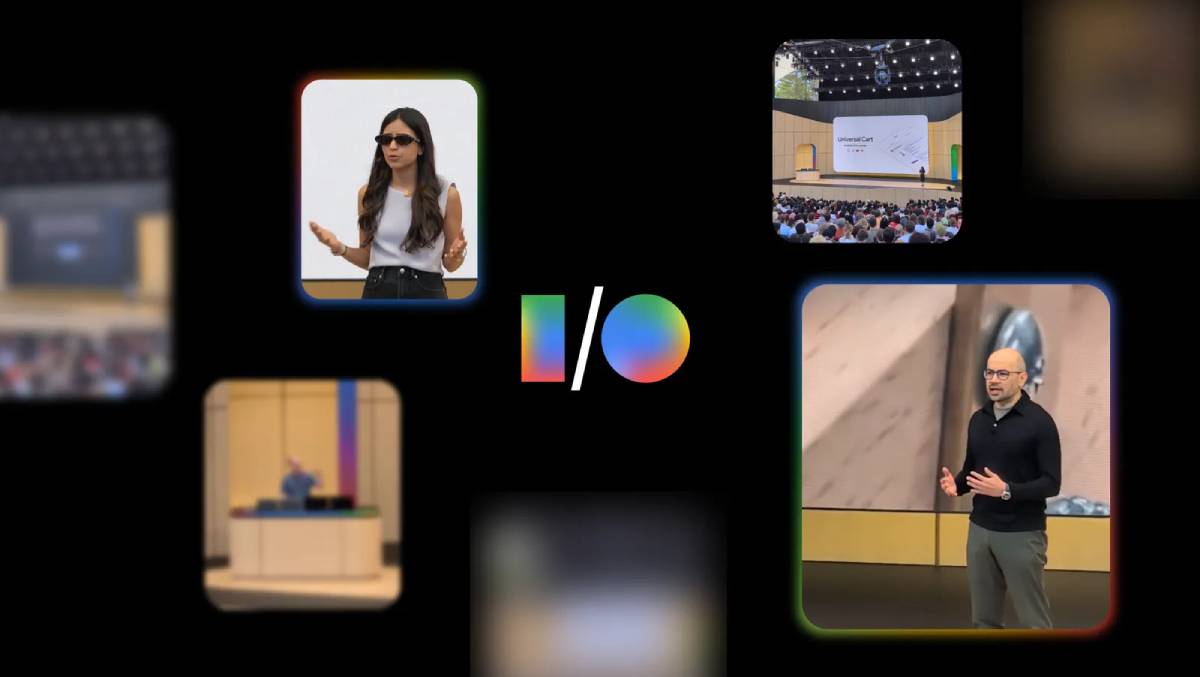
A major technology showcase unfolded at Google I/O 2026 as the company highlighted 12 key moments demonstrating its accelerating shift toward an AI-first ecosystem spanning search, mobile, developer tools, and cloud services. The announcements reinforce Google’s strategy to embed advanced artificial intelligence across its entire product stack, reshaping how users, developers, and enterprises interact with digital systems globally.
According to official event highlights published by Google, I/O 2026 featured 12 major product and platform moments centered on artificial intelligence integration across consumer and enterprise ecosystems.
Key themes included advancements in AI-powered search experiences, upgrades to developer tooling, expanded multimodal capabilities, and deeper integration of AI assistants across Android and productivity platforms. Google also showcased improvements in real-time reasoning systems, personalization engines, and contextual AI assistance designed to operate seamlessly across devices.
The event emphasized tighter integration between AI models and core Google services, reflecting a strategic shift toward unified intelligence systems across search, mobile operating systems, and cloud infrastructure. Developers were presented with expanded APIs and tooling aimed at enabling faster deployment of AI-native applications across industries.
Google I/O 2026 reflects a broader industry transformation in which artificial intelligence has become the foundational layer of modern computing ecosystems. Technology companies are increasingly repositioning their platforms around AI-driven interfaces that replace traditional search, navigation, and productivity workflows with conversational and predictive systems.
The development aligns with global trends where enterprises and consumers are rapidly adopting AI assistants for information retrieval, task automation, content generation, and decision support. This shift is reshaping competitive dynamics across the technology sector as companies race to establish leadership in AI infrastructure, model capabilities, and ecosystem integration.
Historically, Google has transitioned through multiple platform eras from desktop search to mobile-first computing, and now toward AI-native ecosystems. The company’s latest announcements signal a continuation of this evolution, with artificial intelligence positioned as the central organizing layer across its product portfolio.
The broader geopolitical and economic context is also significant. Governments and regulators worldwide are increasingly focused on AI governance, data privacy, algorithmic accountability, and digital market competition. As AI becomes deeply embedded in essential digital infrastructure, platform control and technological sovereignty are emerging as key strategic concerns for national economies.
Industry analysts suggest Google’s I/O 2026 announcements reflect an intensified competitive response to the rapid acceleration of generative AI adoption across the global technology sector. Experts argue that the integration of AI across search and operating systems represents a structural shift that could redefine how users access information online.
Technology strategists note that the convergence of AI models with core platform services may significantly enhance user engagement while also increasing ecosystem lock-in effects. Analysts believe this could strengthen Google’s position in search, mobile operating systems, and cloud computing, while intensifying competition with other major AI ecosystem providers.
Developer ecosystem experts highlight the importance of expanded APIs and tooling, arguing that enabling third-party innovation will be critical for scaling AI-native applications. However, some analysts caution that rapid AI integration also raises challenges related to transparency, data governance, and system reliability at scale.
For businesses, Google’s AI-first ecosystem strategy signals a major shift in how digital products and services will be built, distributed, and monetized. Companies may need to redesign applications around AI-native interfaces rather than traditional search and navigation models, fundamentally changing user engagement strategies.
Investors are closely monitoring large technology firms as AI integration becomes a key driver of long-term revenue growth across cloud computing, advertising, and software ecosystems. Analysts expect increased capital flows into AI infrastructure, developer platforms, and enterprise automation tools.
At the policy level, regulators are likely to intensify scrutiny of platform dominance, data usage practices, and AI governance frameworks. Governments are increasingly evaluating how AI-integrated ecosystems may influence market competition and consumer choice in digital services.
Businesses operating within the technology ecosystem may also face growing requirements around transparency, data protection, and responsible AI deployment standards. The next phase of competition in the technology sector is expected to center on AI ecosystem dominance, developer adoption, and cross-platform integration. Decision-makers will closely watch how rapidly AI-native applications scale across consumer and enterprise environments.
As artificial intelligence becomes the primary interface for digital interaction, companies like Google are positioning themselves at the center of a new computing paradigm defined by intelligent, adaptive, and deeply integrated systems.
Source: Google Blog
Date: May 29, 2026


