
Google Revives Persistent AI for Smart Homes

Google is reintroducing “continued conversations” in its Gemini for Home experience, allowing users to interact with devices without repeatedly triggering wake commands.

April 24, 2026
|
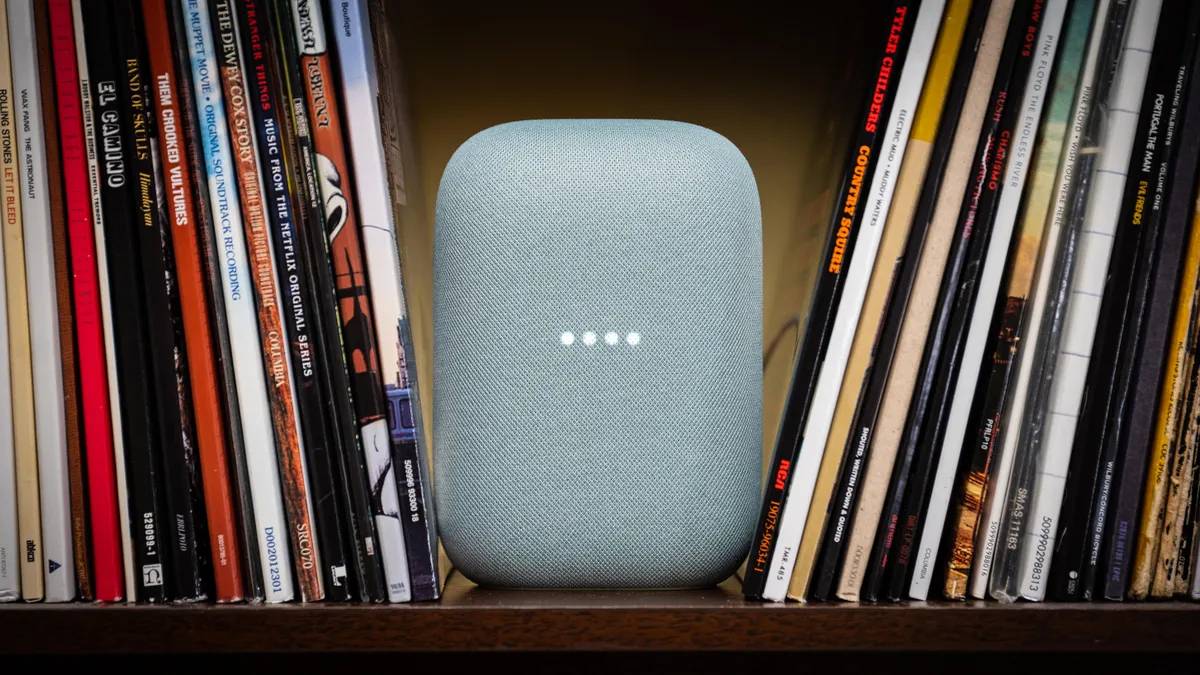
Image Source: CNET

Google is restoring continuous conversation capabilities within its Gemini-powered smart home ecosystem, enabling more natural, context-aware interactions. The update signals a shift toward more intuitive AI-driven user experiences, with implications for consumer technology adoption, competitive positioning, and the evolution of AI platforms and AI frameworks in everyday environments.

Google is reintroducing “continued conversations” in its Gemini for Home experience, allowing users to interact with devices without repeatedly triggering wake commands. The feature enhances conversational flow by maintaining context across multiple queries, improving usability in smart home environments.

This rollout is part of Google’s broader strategy to integrate advanced AI capabilities into consumer products, positioning Gemini as a central AI platform and AI framework for connected devices. The update also reflects intensifying competition among tech giants to deliver seamless, voice-driven experiences, as smart assistants evolve into more capable, context-aware systems.

he move by Google aligns with a broader industry trend toward more natural human-computer interaction. Early voice assistants required rigid commands, limiting usability and adoption. However, advances in generative AI and large language models have enabled more fluid, conversational interfaces.

The return of continued conversations reflects growing demand for frictionless digital experiences in smart homes, where users expect technology to adapt to their behavior rather than the reverse.

Competitors across the technology landscape are investing heavily in similar capabilities, embedding AI platforms and AI frameworks into devices ranging from speakers to appliances. This evolution is reshaping how consumers interact with technology, moving from command-based systems to context-aware, conversational ecosystems.

Technology analysts view Google’s decision as a strategic refinement of its smart home AI offering. Experts note that continuous conversation capabilities are critical for improving user engagement and satisfaction, particularly as consumers become accustomed to more advanced AI interactions.

Industry observers highlight that maintaining conversational context requires sophisticated AI frameworks capable of understanding intent, memory, and multi-turn dialogue. From a market perspective, analysts suggest that enhancements like these could strengthen Google’s competitive position against rivals in the smart assistant space. While no direct quotes are cited, expert consensus frames this update as part of a broader push toward more human-like AI systems embedded in daily life.

For businesses, the update reinforces the importance of investing in conversational AI capabilities to remain competitive in consumer technology markets. Companies developing smart devices may need to integrate more advanced AI platforms and AI frameworks to meet evolving user expectations.

For investors, the move signals continued momentum in the smart home and AI sectors, with innovation driving differentiation. From a policy perspective, increased use of always-on conversational systems may raise questions around data privacy, consent, and transparency, prompting closer regulatory scrutiny.

Looking ahead, continued conversation capabilities are likely to become standard across smart home ecosystems. Key areas to watch include advancements in contextual memory, personalization, and privacy safeguards. As AI systems become more embedded in daily routines, the balance between convenience and responsible data use will remain central to adoption and trust.

Source: CNET
Date: April 2026

  • Featured tools
Tome AI
Free

Tome AI is an AI-powered storytelling and presentation tool designed to help users create compelling narratives and presentations quickly and efficiently. It leverages advanced AI technologies to generate content, images, and animations based on user input.

#
Presentation
#
Startup Tools
Learn more
Surfer AI
Free

Surfer AI is an AI-powered content creation assistant built into the Surfer SEO platform, designed to generate SEO-optimized articles from prompts, leveraging data from search results to inform tone, structure, and relevance.

#
SEO
Learn more

Learn more about future of AI

Join 80,000+ Ai enthusiast getting weekly updates on exciting AI tools.
Thank you! Your submission has been received!
Oops! Something went wrong while submitting the form.

Google Revives Persistent AI for Smart Homes

April 24, 2026

Google is reintroducing “continued conversations” in its Gemini for Home experience, allowing users to interact with devices without repeatedly triggering wake commands.

Image Source: CNET

Google is restoring continuous conversation capabilities within its Gemini-powered smart home ecosystem, enabling more natural, context-aware interactions. The update signals a shift toward more intuitive AI-driven user experiences, with implications for consumer technology adoption, competitive positioning, and the evolution of AI platforms and AI frameworks in everyday environments.

Google is reintroducing “continued conversations” in its Gemini for Home experience, allowing users to interact with devices without repeatedly triggering wake commands. The feature enhances conversational flow by maintaining context across multiple queries, improving usability in smart home environments.

This rollout is part of Google’s broader strategy to integrate advanced AI capabilities into consumer products, positioning Gemini as a central AI platform and AI framework for connected devices. The update also reflects intensifying competition among tech giants to deliver seamless, voice-driven experiences, as smart assistants evolve into more capable, context-aware systems.

he move by Google aligns with a broader industry trend toward more natural human-computer interaction. Early voice assistants required rigid commands, limiting usability and adoption. However, advances in generative AI and large language models have enabled more fluid, conversational interfaces.

The return of continued conversations reflects growing demand for frictionless digital experiences in smart homes, where users expect technology to adapt to their behavior rather than the reverse.

Competitors across the technology landscape are investing heavily in similar capabilities, embedding AI platforms and AI frameworks into devices ranging from speakers to appliances. This evolution is reshaping how consumers interact with technology, moving from command-based systems to context-aware, conversational ecosystems.

Technology analysts view Google’s decision as a strategic refinement of its smart home AI offering. Experts note that continuous conversation capabilities are critical for improving user engagement and satisfaction, particularly as consumers become accustomed to more advanced AI interactions.

Industry observers highlight that maintaining conversational context requires sophisticated AI frameworks capable of understanding intent, memory, and multi-turn dialogue. From a market perspective, analysts suggest that enhancements like these could strengthen Google’s competitive position against rivals in the smart assistant space. While no direct quotes are cited, expert consensus frames this update as part of a broader push toward more human-like AI systems embedded in daily life.

For businesses, the update reinforces the importance of investing in conversational AI capabilities to remain competitive in consumer technology markets. Companies developing smart devices may need to integrate more advanced AI platforms and AI frameworks to meet evolving user expectations.

For investors, the move signals continued momentum in the smart home and AI sectors, with innovation driving differentiation. From a policy perspective, increased use of always-on conversational systems may raise questions around data privacy, consent, and transparency, prompting closer regulatory scrutiny.

Looking ahead, continued conversation capabilities are likely to become standard across smart home ecosystems. Key areas to watch include advancements in contextual memory, personalization, and privacy safeguards. As AI systems become more embedded in daily routines, the balance between convenience and responsible data use will remain central to adoption and trust.

Source: CNET
Date: April 2026

Promote Your Tool

Copy Embed Code

Similar Blogs

April 24, 2026
|

Apple iPhone Feature Targets Rising Spam Calls

Apple is promoting a native iPhone setting “Silence Unknown Callers” that automatically filters calls from numbers not in a user’s contacts, recent calls, or Siri suggestions.
Read more
April 24, 2026
|

McAfee Pushes Tools for Growing Digital Footprints

McAfee has introduced features that allow users to identify, manage, and delete outdated online accounts, subscriptions, and stored personal data.
Read more
April 24, 2026
|

Mullvad Adds iOS Kill Switch to Boost Privacy

Mullvad VPN’s new feature acts as a kill switch, automatically blocking all internet traffic if the VPN disconnects, ensuring no data leaks occur during transitions between networks.
Read more
April 24, 2026
|

AI Tools Boost Cyber Threats From N Korean Hackers

Investigations reveal that threat actors associated with North Korea are increasingly leveraging AI-powered tools to improve phishing campaigns, automate coding tasks, and refine social engineering tactics.
Read more
April 24, 2026
|

Mozilla Uses AI Bug Hunting to Boost Firefox Security

Mozilla used Anthropic’s Mythos AI tool to uncover and fix 271 bugs within Firefox, significantly enhancing the browser’s security and performance.
Read more
April 24, 2026
|

Google Revives Persistent AI for Smart Homes

Google is reintroducing “continued conversations” in its Gemini for Home experience, allowing users to interact with devices without repeatedly triggering wake commands.
Read more