
Intel Revenue Rises on AI Chip Demand Surge

Intel reported significant revenue growth in its latest earnings cycle, driven by rising demand for AI-related semiconductor products and data center solutions.

April 24, 2026
|
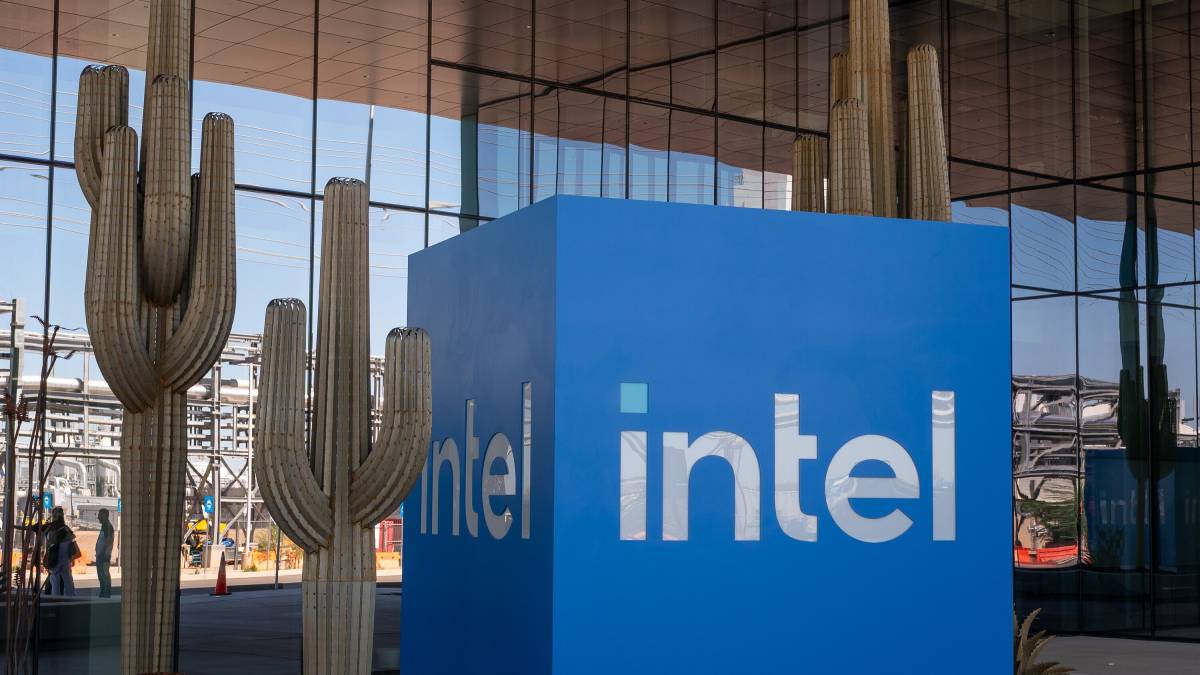
Image Source: The New York Times

A strong revenue surge at Intel underscores the accelerating impact of artificial intelligence on global semiconductor demand. The performance highlights how AI infrastructure expansion is revitalizing legacy chipmakers, reshaping competitive dynamics across the semiconductor industry and reinforcing the strategic importance of computing hardware in the global AI economy.

Intel reported significant revenue growth in its latest earnings cycle, driven by rising demand for AI-related semiconductor products and data center solutions. The company’s performance reflects improving conditions across key segments, including cloud computing infrastructure and enterprise processors.

Management attributed the gains to stronger-than-expected demand for AI-enabled workloads, alongside stabilization in broader semiconductor markets. The results signal a potential turnaround phase after periods of industry-wide inventory correction. Investor sentiment improved following the earnings update, with markets focusing on Intel’s positioning in the AI-driven hardware supply chain and its competitive strategy against advanced chipmakers.

The performance of Intel reflects a broader transformation in the semiconductor industry, where artificial intelligence is driving a new investment cycle. While much attention has focused on high-performance GPUs, demand for CPUs, networking chips, and data center infrastructure has also accelerated significantly.

The semiconductor sector has experienced cyclical volatility in recent years, driven by post-pandemic demand fluctuations and inventory adjustments. However, AI infrastructure expansion has created sustained structural demand across multiple chip categories.

Historically, Intel has faced competitive pressure from specialized chip designers, but the AI boom is rebalancing demand dynamics across the industry. Governments in major economies are also prioritizing semiconductor resilience and domestic production capacity, further reinforcing the strategic importance of companies like Intel in global supply chains.

Analysts suggest that the revenue performance at Intel indicates early signs of recovery in the broader semiconductor cycle, supported by AI infrastructure investments. Experts highlight that while NVIDIA and other GPU-focused firms dominate AI headlines, CPU and system-level chip demand remains essential for large-scale AI deployment.

Market observers note that Intel’s positioning in data center infrastructure could become increasingly important as AI workloads diversify beyond training into inference and enterprise applications.

Industry commentary also emphasizes that government-backed semiconductor initiatives in the United States and allied economies are likely to support long-term demand stability. While no direct quotes are cited, analysts broadly frame Intel’s performance as part of a widening AI hardware ecosystem rather than a GPU-only growth story.

For global technology companies, the performance of Intel signals renewed momentum in foundational semiconductor segments critical to AI infrastructure. Enterprises building AI systems may benefit from a more diversified chip supply base, reducing reliance on a narrow set of GPU providers.

For investors, the results reinforce the view that AI-driven growth extends across the entire semiconductor value chain. From a policy perspective, governments are likely to continue prioritizing semiconductor independence, supply chain resilience, and domestic manufacturing capacity, given the strategic importance of AI infrastructure in national competitiveness and security frameworks.

Looking ahead, attention will focus on Intel’s ability to sustain AI-driven demand growth and strengthen its competitive positioning in data center and enterprise computing markets. Key uncertainties include pricing pressure, technological competition, and global demand cycles. As AI adoption expands, semiconductor demand is expected to remain structurally strong, with Intel positioned as a key beneficiary if execution aligns with market expectations.

Source: The New York Times
Date: April 23, 2026

  • Featured tools
Tome AI
Free

Tome AI is an AI-powered storytelling and presentation tool designed to help users create compelling narratives and presentations quickly and efficiently. It leverages advanced AI technologies to generate content, images, and animations based on user input.

#
Presentation
#
Startup Tools
Learn more
WellSaid Ai
Free

WellSaid AI is an advanced text-to-speech platform that transforms written text into lifelike, human-quality voiceovers.

#
Text to Speech
Learn more

Learn more about future of AI

Join 80,000+ Ai enthusiast getting weekly updates on exciting AI tools.
Thank you! Your submission has been received!
Oops! Something went wrong while submitting the form.

Intel Revenue Rises on AI Chip Demand Surge

April 24, 2026

Intel reported significant revenue growth in its latest earnings cycle, driven by rising demand for AI-related semiconductor products and data center solutions.

Image Source: The New York Times

A strong revenue surge at Intel underscores the accelerating impact of artificial intelligence on global semiconductor demand. The performance highlights how AI infrastructure expansion is revitalizing legacy chipmakers, reshaping competitive dynamics across the semiconductor industry and reinforcing the strategic importance of computing hardware in the global AI economy.

Intel reported significant revenue growth in its latest earnings cycle, driven by rising demand for AI-related semiconductor products and data center solutions. The company’s performance reflects improving conditions across key segments, including cloud computing infrastructure and enterprise processors.

Management attributed the gains to stronger-than-expected demand for AI-enabled workloads, alongside stabilization in broader semiconductor markets. The results signal a potential turnaround phase after periods of industry-wide inventory correction. Investor sentiment improved following the earnings update, with markets focusing on Intel’s positioning in the AI-driven hardware supply chain and its competitive strategy against advanced chipmakers.

The performance of Intel reflects a broader transformation in the semiconductor industry, where artificial intelligence is driving a new investment cycle. While much attention has focused on high-performance GPUs, demand for CPUs, networking chips, and data center infrastructure has also accelerated significantly.

The semiconductor sector has experienced cyclical volatility in recent years, driven by post-pandemic demand fluctuations and inventory adjustments. However, AI infrastructure expansion has created sustained structural demand across multiple chip categories.

Historically, Intel has faced competitive pressure from specialized chip designers, but the AI boom is rebalancing demand dynamics across the industry. Governments in major economies are also prioritizing semiconductor resilience and domestic production capacity, further reinforcing the strategic importance of companies like Intel in global supply chains.

Analysts suggest that the revenue performance at Intel indicates early signs of recovery in the broader semiconductor cycle, supported by AI infrastructure investments. Experts highlight that while NVIDIA and other GPU-focused firms dominate AI headlines, CPU and system-level chip demand remains essential for large-scale AI deployment.

Market observers note that Intel’s positioning in data center infrastructure could become increasingly important as AI workloads diversify beyond training into inference and enterprise applications.

Industry commentary also emphasizes that government-backed semiconductor initiatives in the United States and allied economies are likely to support long-term demand stability. While no direct quotes are cited, analysts broadly frame Intel’s performance as part of a widening AI hardware ecosystem rather than a GPU-only growth story.

For global technology companies, the performance of Intel signals renewed momentum in foundational semiconductor segments critical to AI infrastructure. Enterprises building AI systems may benefit from a more diversified chip supply base, reducing reliance on a narrow set of GPU providers.

For investors, the results reinforce the view that AI-driven growth extends across the entire semiconductor value chain. From a policy perspective, governments are likely to continue prioritizing semiconductor independence, supply chain resilience, and domestic manufacturing capacity, given the strategic importance of AI infrastructure in national competitiveness and security frameworks.

Looking ahead, attention will focus on Intel’s ability to sustain AI-driven demand growth and strengthen its competitive positioning in data center and enterprise computing markets. Key uncertainties include pricing pressure, technological competition, and global demand cycles. As AI adoption expands, semiconductor demand is expected to remain structurally strong, with Intel positioned as a key beneficiary if execution aligns with market expectations.

Source: The New York Times
Date: April 23, 2026

Promote Your Tool

Copy Embed Code

Similar Blogs

June 24, 2026
|

Denmark Launches €7M AI Lab

The Danish government has committed €7 million to establish a national AI Lab focused on accelerating real-world AI adoption.
Read more
June 24, 2026
|

Avrea Emerges With CI/CD Bet

Avrea has raised $4.7 million in pre-seed funding to modernize continuous integration and continuous deployment (CI/CD) systems for environments dominated by AI-generated code.
Read more
June 24, 2026
|

Atech Backs Lovable Hardware Moment

Atech is advocating a new approach to hardware development where AI tools streamline design, prototyping, and iteration cycles.
Read more
June 24, 2026
|

A16z Backs Endra Engineering Automation

Endra’s $50 million Series A round, led by Andreessen Horowitz, marks one of the largest early-stage investments in AI-driven engineering design tools in Europe.
Read more
June 24, 2026
|

Netcompany Expands Smart Airport Play

Netcompany’s acquisition of full control over Smarter Airports marks a strategic expansion into intelligent aviation infrastructure systems. The platform, integrated with AIRHART technology, is already being deployed at major hubs.
Read more
June 24, 2026
|

Swiss VC Market Enters Maturity Phase

The Swiss venture landscape is showing increased exit momentum through acquisitions and secondary sales, indicating healthier liquidity cycles for early-stage investors.
Read more