



A sharp debate has emerged over the real drivers of workforce reductions as a leading semiconductor executive challenges claims that artificial intelligence is responsible for corporate layoffs. The remarks underscore growing tensions in how companies attribute restructuring decisions amid rapid AI adoption and shifting global labor dynamics.
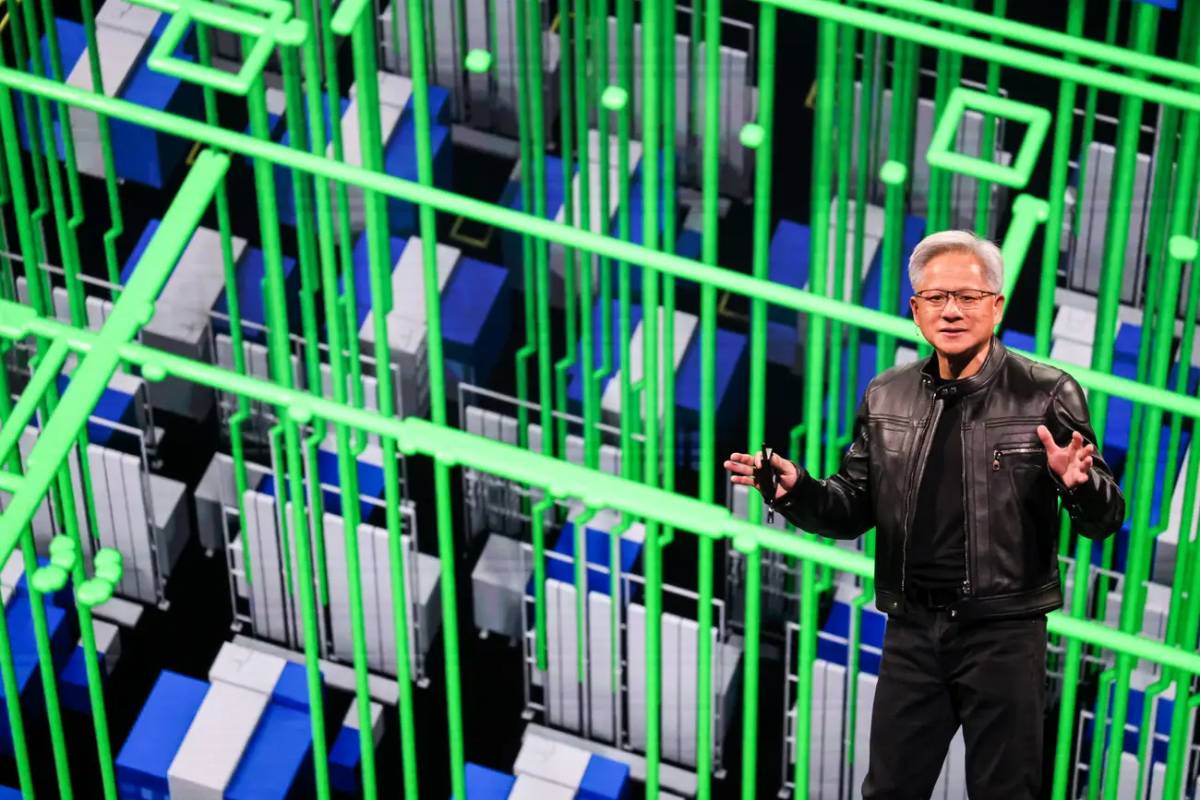
Jensen Huang, chief executive of NVIDIA, has criticized corporate leaders who attribute job cuts primarily to artificial intelligence, describing such explanations as a “lazy” narrative.
His comments come amid widespread restructuring across the technology sector, where firms are increasingly integrating AI tools into software development, operations, and customer service workflows.
While some companies have cited efficiency gains from AI as a factor in workforce reductions, Huang argues that broader business decisions, cost cycles, and organizational restructuring are more significant drivers than automation alone.
The global technology sector is undergoing a structural transformation driven by rapid AI adoption, with firms integrating automation tools across multiple business functions. This has led to heightened scrutiny over the relationship between AI deployment and employment trends.
Companies like NVIDIA sit at the center of this transition, supplying the infrastructure powering large-scale AI systems used by enterprises worldwide.
Historically, technological shifts from industrial automation to cloud computing have often been associated with workforce displacement concerns. However, economists frequently note that job losses during such transitions are rarely attributable to a single factor.
The current debate reflects this complexity, as firms navigate rising operational costs, macroeconomic uncertainty, and productivity pressures alongside AI-driven efficiency gains. The narrative around AI as a direct cause of layoffs has therefore become increasingly contested within corporate leadership circles.
Industry analysts suggest that while AI is reshaping job functions, attributing layoffs solely to automation oversimplifies broader corporate restructuring dynamics. Experts note that firms often use technological transformation narratives to frame cost-cutting measures that may also be influenced by demand fluctuations, capital discipline, or margin pressures.
Jensen Huang’s remarks align with a growing view among some technology leaders that AI is being over-credited for workforce reductions in public discourse. Labor economists argue that productivity-enhancing technologies tend to shift job composition rather than eliminate employment outright, although transitional displacement can still occur in specific roles.
Meanwhile, market observers emphasize that companies like NVIDIA benefit from AI-driven demand growth, making executive narratives around AI’s economic impact particularly influential in shaping investor sentiment and policy discussions.
For corporations, the framing of AI as a driver of layoffs carries reputational and regulatory implications, particularly as workforce transparency becomes a growing focus for stakeholders. Businesses may need to more clearly differentiate between AI-driven efficiency gains and broader restructuring decisions.
For investors, the debate affects how AI-linked productivity gains are priced into earnings expectations across technology firms. For policymakers, the narrative raises questions about labor market transitions and whether existing workforce policies adequately address AI-related disruption. For executives, the key challenge is balancing automation-driven efficiency with workforce stability while managing public perception and regulatory scrutiny.
The debate over AI’s role in workforce restructuring is likely to intensify as adoption expands across industries. Future discussions will depend on clearer data distinguishing automation-driven displacement from cyclical corporate restructuring. Decision-makers will increasingly be scrutinized for how they communicate AI-related changes to stakeholders. The central uncertainty remains the true long-term net employment impact of large-scale AI integration.
Source: Business Insider – Nvidia CEO Jensen Huang AI Commentary
Date: May 2026


