



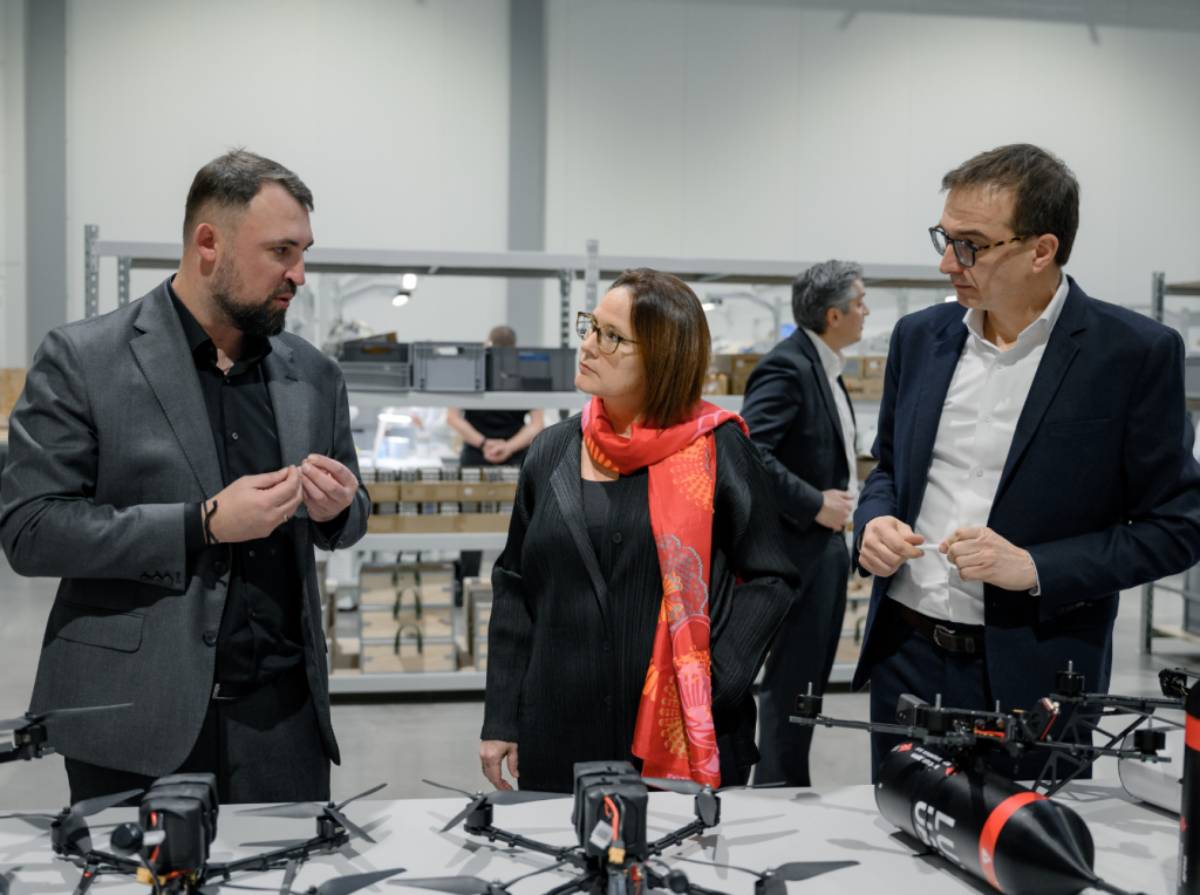
A Luxembourg-based startup is bringing digital twin technology to the defense sector by developing virtual battlefield environments that improve mission planning, training, and operational decision-making. The initiative reflects the growing convergence of artificial intelligence, simulation technologies, and defense innovation, with implications for governments, security agencies, investors, and Europe's expanding defense-tech ecosystem.
The startup is building advanced digital twin solutions capable of creating real-time virtual representations of battlefield environments. By combining data analytics, simulation, artificial intelligence, and geospatial technologies, the platform aims to help military organizations model operational scenarios, improve situational awareness, and optimize mission planning before deployment.
The project highlights Luxembourg's growing ambitions within Europe's defense technology landscape, where startups are increasingly collaborating with public institutions, research organizations, and industry partners. As geopolitical tensions continue to reshape defense priorities across Europe, demand for predictive simulation technologies is expanding alongside investments in AI-driven military capabilities and resilient digital infrastructure.
The development aligns with a broader transformation in global defense strategy, where digital technologies are becoming central to military modernization. Governments are investing heavily in artificial intelligence, autonomous systems, cybersecurity, satellite intelligence, and digital twin technologies to improve operational readiness while reducing costs and risks.
Digital twins already widely adopted in manufacturing, aerospace, healthcare, and smart infrastructure are now finding applications in defense by enabling commanders to simulate complex operational environments before real-world deployment. NATO members and European governments have accelerated spending on advanced defense technologies in response to evolving geopolitical challenges, supply chain vulnerabilities, and changing security dynamics.
Luxembourg has increasingly positioned itself as a hub for space, cybersecurity, and dual-use technologies, creating opportunities for startups capable of serving both commercial and defense markets through innovative software platforms and advanced simulation capabilities.
Industry experts view digital twin technology as one of the most promising innovations for modern defense planning. By creating accurate virtual replicas of operational environments, defense organizations can test strategies, evaluate risks, and improve coordination without exposing personnel or equipment to unnecessary danger.
Technology analysts note that artificial intelligence significantly enhances these systems by enabling real-time data processing, predictive analytics, and adaptive scenario modelling. As conflicts become increasingly data-driven, digital twins are expected to support faster and more informed decision-making across military operations.
Corporate leaders across the defense technology sector also emphasize that collaboration between startups, governments, and established defense contractors will be essential to accelerate innovation while ensuring interoperability, cybersecurity, and compliance with evolving European defense standards and procurement frameworks.
For businesses, the emergence of defense-focused digital twin platforms creates opportunities across software development, artificial intelligence, cloud computing, geospatial intelligence, and advanced simulation services. Investors are likely to view the sector as an attractive growth market given rising defense budgets across Europe and increasing demand for dual-use technologies.
Governments may also encourage greater public-private collaboration to strengthen domestic innovation ecosystems and reduce dependence on external technology providers. For executives, the trend reinforces that defense technology is becoming an increasingly strategic investment area where AI, digital infrastructure, and cybersecurity converge with national security priorities.
As defense modernization accelerates across Europe, digital twin technologies are expected to become integral to military planning, operational training, and strategic decision-making. Policymakers, investors, and defense organizations will closely watch how startups scale these capabilities while meeting stringent security and regulatory requirements. Companies capable of combining AI, simulation, and secure digital infrastructure could play a pivotal role in shaping the future of European defense innovation.
Source: Silicon Luxembourg
Date: July 3, 2026


