
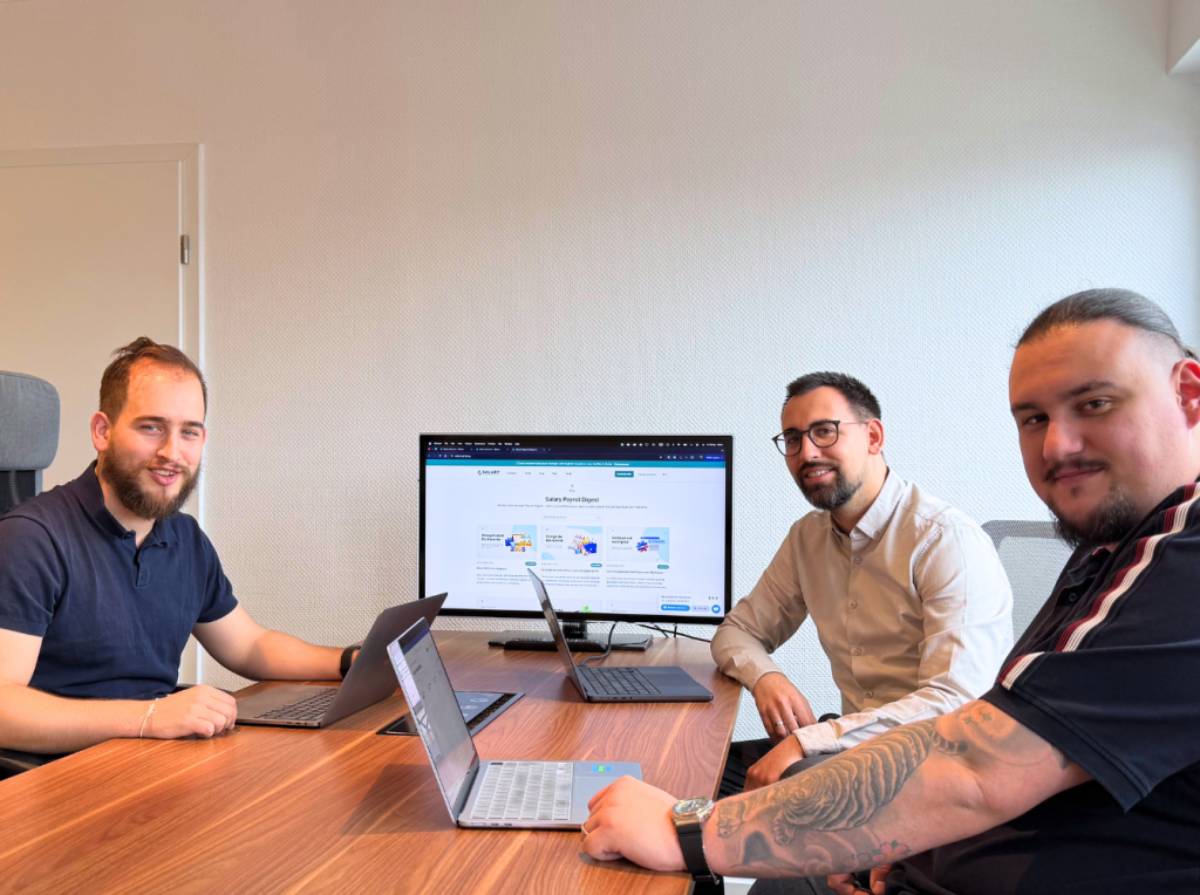
Payroll Automation Transforms Digital HR

The featured payroll technology initiative demonstrates how automation is simplifying salary processing by digitizing traditionally manual HR functions.

June 30, 2026
|
Image Source: Silicon Luxembourg

Businesses are increasingly embracing payroll automation as a strategic tool to improve operational efficiency, reduce administrative complexity, and enhance employee experience. A growing wave of digital payroll solutions is transforming human resource management, enabling organizations to streamline compliance, automate repetitive tasks, and support scalable workforce operations in an increasingly digital economy.

The featured payroll technology initiative demonstrates how automation is simplifying salary processing by digitizing traditionally manual HR functions. The platform focuses on reducing administrative workload through automated payslip generation, payroll calculations, compliance management, and employee documentation.

As businesses expand across multiple jurisdictions, payroll complexity continues to increase due to varying tax regulations, employment laws, and reporting requirements. Automated platforms aim to minimize human error while improving transparency and operational consistency.

The solution also supports HR teams by allowing them to dedicate more time to strategic workforce planning rather than repetitive administrative processes, aligning payroll management with broader digital transformation initiatives.

Payroll management has evolved from a back-office administrative function into a strategic component of enterprise digital transformation. Organizations operating across multiple markets face growing regulatory complexity, evolving labor laws, changing tax obligations, and increasing employee expectations for seamless digital experiences.

The rapid adoption of cloud computing, artificial intelligence, robotic process automation, and Software-as-a-Service (SaaS) platforms has accelerated modernization across HR functions. Payroll automation is becoming an integral part of broader Human Capital Management (HCM) ecosystems that integrate recruitment, workforce planning, performance management, compliance, and employee engagement.

Across Europe, businesses are investing heavily in HR technology to improve operational efficiency while addressing talent shortages and rising compliance demands. Digital payroll platforms are increasingly viewed as essential infrastructure for companies seeking scalable operations, improved governance, and enhanced employee satisfaction in competitive labor markets.

HR technology specialists argue that payroll automation delivers value beyond operational efficiency by strengthening compliance, improving workforce transparency, and reducing organizational risk. Experts note that automated systems significantly reduce manual processing errors while providing real-time reporting and analytics for management teams.

Enterprise software analysts also emphasize that integrated payroll platforms enable finance and HR departments to collaborate more effectively through centralized workforce data and automated workflows. This improves decision-making while supporting regulatory reporting and financial planning.

Industry observers further suggest that employee expectations are evolving alongside workplace digitization. Modern professionals increasingly expect self-service payroll access, digital documentation, and transparent compensation processes. Organizations investing in intelligent payroll infrastructure are therefore strengthening both operational resilience and employer competitiveness in increasingly technology-driven labor markets.

For businesses, payroll automation offers opportunities to reduce administrative costs, improve compliance accuracy, and enhance workforce productivity. Small and medium-sized enterprises may particularly benefit from scalable solutions that simplify complex regulatory requirements without expanding administrative teams.

Investors continue to view HR technology as an attractive growth sector driven by digital transformation, recurring SaaS revenue models, and expanding enterprise demand. Policymakers may also encourage digital payroll adoption as governments modernize tax reporting, employment administration, and digital public services.

For executives, payroll modernization increasingly represents both an operational efficiency initiative and a strategic investment supporting long-term workforce management and business scalability.

Payroll automation is expected to remain a major investment priority as organizations continue digitizing core business functions. Decision-makers will monitor advances in artificial intelligence, compliance automation, and integrated HR platforms that further simplify workforce management. Companies adopting intelligent payroll technologies early are likely to strengthen operational resilience, improve employee experience, and remain more competitive in increasingly digital labor markets.

Source: Silicon Luxembourg
Date: June 30, 2026

  • Featured tools
Copy Ai
Free

Copy AI is one of the most popular AI writing tools designed to help professionals create high-quality content quickly. Whether you are a product manager drafting feature descriptions or a marketer creating ad copy, Copy AI can save hours of work while maintaining creativity and tone.

#
Copywriting
Learn more
Murf Ai
Free

Murf AI Review – Advanced AI Voice Generator for Realistic Voiceovers

#
Text to Speech
Learn more

Learn more about future of AI

Join 80,000+ Ai enthusiast getting weekly updates on exciting AI tools.
Thank you! Your submission has been received!
Oops! Something went wrong while submitting the form.

Payroll Automation Transforms Digital HR

June 30, 2026

The featured payroll technology initiative demonstrates how automation is simplifying salary processing by digitizing traditionally manual HR functions.

Image Source: Silicon Luxembourg

Businesses are increasingly embracing payroll automation as a strategic tool to improve operational efficiency, reduce administrative complexity, and enhance employee experience. A growing wave of digital payroll solutions is transforming human resource management, enabling organizations to streamline compliance, automate repetitive tasks, and support scalable workforce operations in an increasingly digital economy.

The featured payroll technology initiative demonstrates how automation is simplifying salary processing by digitizing traditionally manual HR functions. The platform focuses on reducing administrative workload through automated payslip generation, payroll calculations, compliance management, and employee documentation.

As businesses expand across multiple jurisdictions, payroll complexity continues to increase due to varying tax regulations, employment laws, and reporting requirements. Automated platforms aim to minimize human error while improving transparency and operational consistency.

The solution also supports HR teams by allowing them to dedicate more time to strategic workforce planning rather than repetitive administrative processes, aligning payroll management with broader digital transformation initiatives.

Payroll management has evolved from a back-office administrative function into a strategic component of enterprise digital transformation. Organizations operating across multiple markets face growing regulatory complexity, evolving labor laws, changing tax obligations, and increasing employee expectations for seamless digital experiences.

The rapid adoption of cloud computing, artificial intelligence, robotic process automation, and Software-as-a-Service (SaaS) platforms has accelerated modernization across HR functions. Payroll automation is becoming an integral part of broader Human Capital Management (HCM) ecosystems that integrate recruitment, workforce planning, performance management, compliance, and employee engagement.

Across Europe, businesses are investing heavily in HR technology to improve operational efficiency while addressing talent shortages and rising compliance demands. Digital payroll platforms are increasingly viewed as essential infrastructure for companies seeking scalable operations, improved governance, and enhanced employee satisfaction in competitive labor markets.

HR technology specialists argue that payroll automation delivers value beyond operational efficiency by strengthening compliance, improving workforce transparency, and reducing organizational risk. Experts note that automated systems significantly reduce manual processing errors while providing real-time reporting and analytics for management teams.

Enterprise software analysts also emphasize that integrated payroll platforms enable finance and HR departments to collaborate more effectively through centralized workforce data and automated workflows. This improves decision-making while supporting regulatory reporting and financial planning.

Industry observers further suggest that employee expectations are evolving alongside workplace digitization. Modern professionals increasingly expect self-service payroll access, digital documentation, and transparent compensation processes. Organizations investing in intelligent payroll infrastructure are therefore strengthening both operational resilience and employer competitiveness in increasingly technology-driven labor markets.

For businesses, payroll automation offers opportunities to reduce administrative costs, improve compliance accuracy, and enhance workforce productivity. Small and medium-sized enterprises may particularly benefit from scalable solutions that simplify complex regulatory requirements without expanding administrative teams.

Investors continue to view HR technology as an attractive growth sector driven by digital transformation, recurring SaaS revenue models, and expanding enterprise demand. Policymakers may also encourage digital payroll adoption as governments modernize tax reporting, employment administration, and digital public services.

For executives, payroll modernization increasingly represents both an operational efficiency initiative and a strategic investment supporting long-term workforce management and business scalability.

Payroll automation is expected to remain a major investment priority as organizations continue digitizing core business functions. Decision-makers will monitor advances in artificial intelligence, compliance automation, and integrated HR platforms that further simplify workforce management. Companies adopting intelligent payroll technologies early are likely to strengthen operational resilience, improve employee experience, and remain more competitive in increasingly digital labor markets.

Source: Silicon Luxembourg
Date: June 30, 2026

Promote Your Tool

Copy Embed Code

Similar Blogs

June 30, 2026
|

AI Cloud Giant Hits Valuation Surge

Modal Labs, founded by former Spotify engineer Erik Bernhardsson, has raised $355 million in Series C financing, valuing the AI cloud company at $4.65 billion.
Read more
June 30, 2026
|

Energy Pricing Disruption: Reel’s €15M Raise

Reel’s €15 million Series A round will support expansion across European markets, with a particular focus on strengthening its operational footprint in Germany.
Read more
June 30, 2026
|

Biotech Revival: Flerie Revives Drug Bet

Investment firm Flerie has moved to reposition Biosergen’s drug candidate BSG005, a long-stalled antifungal treatment previously sidelined due to development and funding challenges.
Read more
June 30, 2026
|

Nordic Power Shake Up Triggers Consolidation Battle

Finnish energy major Fortum has tabled a NOK 5.1 billion offer to acquire Elmera Group, a Norwegian electricity retailer with a strong residential and SME customer base.
Read more
June 30, 2026
|

Social Media Reshapes Brand Communication

The article emphasizes the core principles of effective social media management, including content consistency, audience segmentation, and platform-native storytelling.
Read more
June 30, 2026
|

Foozo Plus Expands Digital Meal Benefits

Foozo Plus offers businesses a more adaptable way to manage corporate food benefits by allowing employers to distribute digital meal allowances that employees can use across participating restaurants and food providers.
Read more