
Swiss Steam Tram Gains Heritage Protection

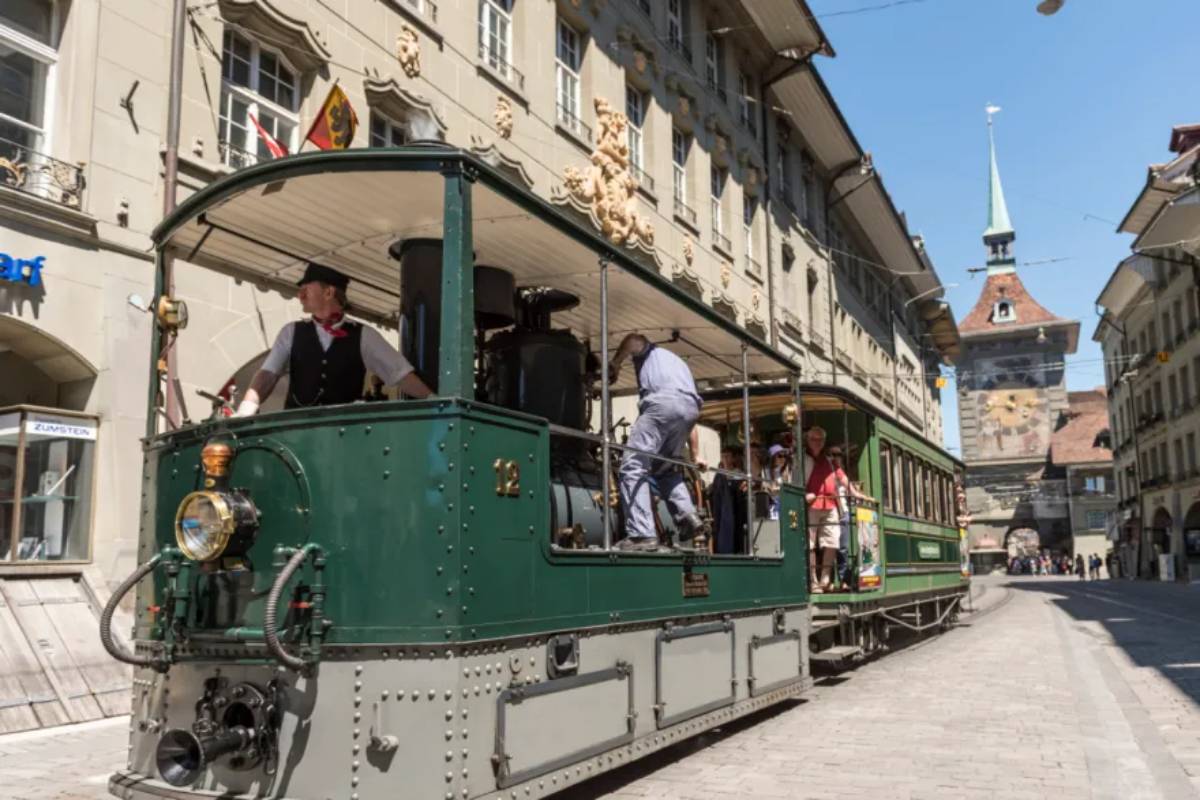
The steam tram, located in Bern, has been formally listed as a protected monument following approval from heritage authorities.

June 25, 2026
|
Image Source: Swissinfo

A historic steam tram in Switzerland has been officially granted heritage protection status, marking a significant step in preserving the country’s industrial and transport legacy. The decision underscores growing efforts to safeguard historical infrastructure, reflecting broader cultural and tourism priorities tied to national identity and heritage conservation.

The steam tram, located in Bern, has been formally listed as a protected monument following approval from heritage authorities. The designation ensures legal protection against alteration, dismantling, or commercial redevelopment, preserving the asset for future generations.

The tram is recognized as a rare example of early steam-powered urban transport, representing a pivotal period in Switzerland’s industrial and mobility evolution. Authorities emphasized its historical and educational value, particularly in illustrating the development of public transportation systems.

The protection status will enable continued restoration efforts and potentially expand its role as a cultural and educational attraction. Local heritage organizations and transport historians have supported the move, citing its importance in documenting technological progress in urban mobility.

The development aligns with a broader trend across global markets where countries are increasingly investing in the preservation of industrial heritage as part of cultural identity and tourism strategy. Historic transport systems, in particular, are being recognized not only as artifacts but also as educational and economic assets.

Switzerland has a long-standing tradition of preserving historical infrastructure, reflecting its broader commitment to cultural conservation and high-quality tourism experiences. The country’s rail and transport heritage is widely regarded as a key component of its national identity.

Historically, steam-powered trams played an important role in urban development across Europe during the late 19th and early 20th centuries. Many such systems have been dismantled, making surviving examples increasingly rare and culturally significant.

In recent years, there has been growing recognition of the economic value of heritage tourism, with preserved industrial sites attracting both domestic and international visitors. This has encouraged governments to formalize protection frameworks for historically significant infrastructure.

Heritage experts emphasize that preserving transport artifacts like steam trams provides valuable insight into the evolution of urban mobility and engineering innovation. Such structures serve as tangible links between historical industrial development and modern transportation systems.

Cultural policy analysts note that heritage designation often strengthens regional tourism ecosystems by creating niche attractions that complement broader tourism offerings. Transport historians highlight that steam trams represent a transitional phase between horse-drawn carriages and electrified public transport, making them important educational tools for understanding technological progress.

Urban development specialists suggest that preserving historical infrastructure can also contribute to city branding strategies, enhancing cultural identity and international recognition. Tourism sector observers add that heritage sites increasingly play a role in experiential travel trends, where visitors seek authentic historical and cultural engagement rather than conventional sightseeing.

For local authorities, heritage protection can strengthen cultural tourism strategies and support long-term preservation funding models. It also introduces regulatory obligations to maintain and manage the site appropriately.

For the tourism industry, the designation enhances Switzerland’s portfolio of cultural attractions, potentially increasing visitor engagement and regional economic activity. For investors and private operators in the heritage and tourism sector, protected status may create opportunities for curated experiences, guided tours, and educational programming.

For policymakers, the decision reinforces the importance of balancing modernization with preservation, particularly in urban environments undergoing infrastructure redevelopment. The steam tram’s heritage status is expected to support ongoing restoration efforts and potentially expand its role as a cultural tourism asset. Future initiatives may include enhanced visitor programs and integration into broader historical transport routes.

Decision-makers should monitor how heritage preservation strategies evolve in Switzerland, particularly in relation to funding, tourism integration, and urban development planning. The move reflects a broader commitment to safeguarding industrial history within modern economies.

Source: Swissinfo
Date: June 25, 2026

  • Featured tools
Tome AI
Free

Tome AI is an AI-powered storytelling and presentation tool designed to help users create compelling narratives and presentations quickly and efficiently. It leverages advanced AI technologies to generate content, images, and animations based on user input.

#
Presentation
#
Startup Tools
Learn more
Figstack AI
Free

Figstack AI is an intelligent assistant for developers that explains code, generates docstrings, converts code between languages, and analyzes time complexity helping you work smarter, not harder.

#
Coding
Learn more

Learn more about future of AI

Join 80,000+ Ai enthusiast getting weekly updates on exciting AI tools.
Thank you! Your submission has been received!
Oops! Something went wrong while submitting the form.

Swiss Steam Tram Gains Heritage Protection

June 25, 2026

The steam tram, located in Bern, has been formally listed as a protected monument following approval from heritage authorities.

Image Source: Swissinfo

A historic steam tram in Switzerland has been officially granted heritage protection status, marking a significant step in preserving the country’s industrial and transport legacy. The decision underscores growing efforts to safeguard historical infrastructure, reflecting broader cultural and tourism priorities tied to national identity and heritage conservation.

The steam tram, located in Bern, has been formally listed as a protected monument following approval from heritage authorities. The designation ensures legal protection against alteration, dismantling, or commercial redevelopment, preserving the asset for future generations.

The tram is recognized as a rare example of early steam-powered urban transport, representing a pivotal period in Switzerland’s industrial and mobility evolution. Authorities emphasized its historical and educational value, particularly in illustrating the development of public transportation systems.

The protection status will enable continued restoration efforts and potentially expand its role as a cultural and educational attraction. Local heritage organizations and transport historians have supported the move, citing its importance in documenting technological progress in urban mobility.

The development aligns with a broader trend across global markets where countries are increasingly investing in the preservation of industrial heritage as part of cultural identity and tourism strategy. Historic transport systems, in particular, are being recognized not only as artifacts but also as educational and economic assets.

Switzerland has a long-standing tradition of preserving historical infrastructure, reflecting its broader commitment to cultural conservation and high-quality tourism experiences. The country’s rail and transport heritage is widely regarded as a key component of its national identity.

Historically, steam-powered trams played an important role in urban development across Europe during the late 19th and early 20th centuries. Many such systems have been dismantled, making surviving examples increasingly rare and culturally significant.

In recent years, there has been growing recognition of the economic value of heritage tourism, with preserved industrial sites attracting both domestic and international visitors. This has encouraged governments to formalize protection frameworks for historically significant infrastructure.

Heritage experts emphasize that preserving transport artifacts like steam trams provides valuable insight into the evolution of urban mobility and engineering innovation. Such structures serve as tangible links between historical industrial development and modern transportation systems.

Cultural policy analysts note that heritage designation often strengthens regional tourism ecosystems by creating niche attractions that complement broader tourism offerings. Transport historians highlight that steam trams represent a transitional phase between horse-drawn carriages and electrified public transport, making them important educational tools for understanding technological progress.

Urban development specialists suggest that preserving historical infrastructure can also contribute to city branding strategies, enhancing cultural identity and international recognition. Tourism sector observers add that heritage sites increasingly play a role in experiential travel trends, where visitors seek authentic historical and cultural engagement rather than conventional sightseeing.

For local authorities, heritage protection can strengthen cultural tourism strategies and support long-term preservation funding models. It also introduces regulatory obligations to maintain and manage the site appropriately.

For the tourism industry, the designation enhances Switzerland’s portfolio of cultural attractions, potentially increasing visitor engagement and regional economic activity. For investors and private operators in the heritage and tourism sector, protected status may create opportunities for curated experiences, guided tours, and educational programming.

For policymakers, the decision reinforces the importance of balancing modernization with preservation, particularly in urban environments undergoing infrastructure redevelopment. The steam tram’s heritage status is expected to support ongoing restoration efforts and potentially expand its role as a cultural tourism asset. Future initiatives may include enhanced visitor programs and integration into broader historical transport routes.

Decision-makers should monitor how heritage preservation strategies evolve in Switzerland, particularly in relation to funding, tourism integration, and urban development planning. The move reflects a broader commitment to safeguarding industrial history within modern economies.

Source: Swissinfo
Date: June 25, 2026

Promote Your Tool

Copy Embed Code

Similar Blogs

June 25, 2026
|

OQ Tech Boosts Satellite Position

The European financing package will support OQ Technology’s expansion of its low Earth orbit (LEO) satellite constellation aimed at providing direct-to-device connectivity.
Read more
June 25, 2026
|

Women Led Startups Show Funding Gap

The startup ecosystem has seen a steady increase in women-founded and women-led companies, particularly in sectors such as digital services, healthtech, fintech, and sustainability-driven innovation.
Read more
June 25, 2026
|

AI Healthcare Unlocks Transformation Potential

AI applications in healthcare are expanding across multiple domains, including clinical decision support, medical imaging, drug discovery, and patient management systems.
Read more
June 25, 2026
|

Helical Raises $10M for AI Drug Lab

The funding round will enable Helical to scale its virtual AI lab infrastructure, which simulates complex biological processes for drug discovery.
Read more
June 25, 2026
|

Digital Healthtech Faces Investor Pressure

The guidance highlights that digital health startups must now demonstrate stronger clinical validation, data security standards, and measurable patient outcomes to secure investor confidence.
Read more
June 25, 2026
|

Luxembourg Space Strategy Turns Decade

Over the past ten years, Luxembourg has systematically developed its space sector through targeted investments, policy frameworks, and partnerships with private space companies.
Read more