



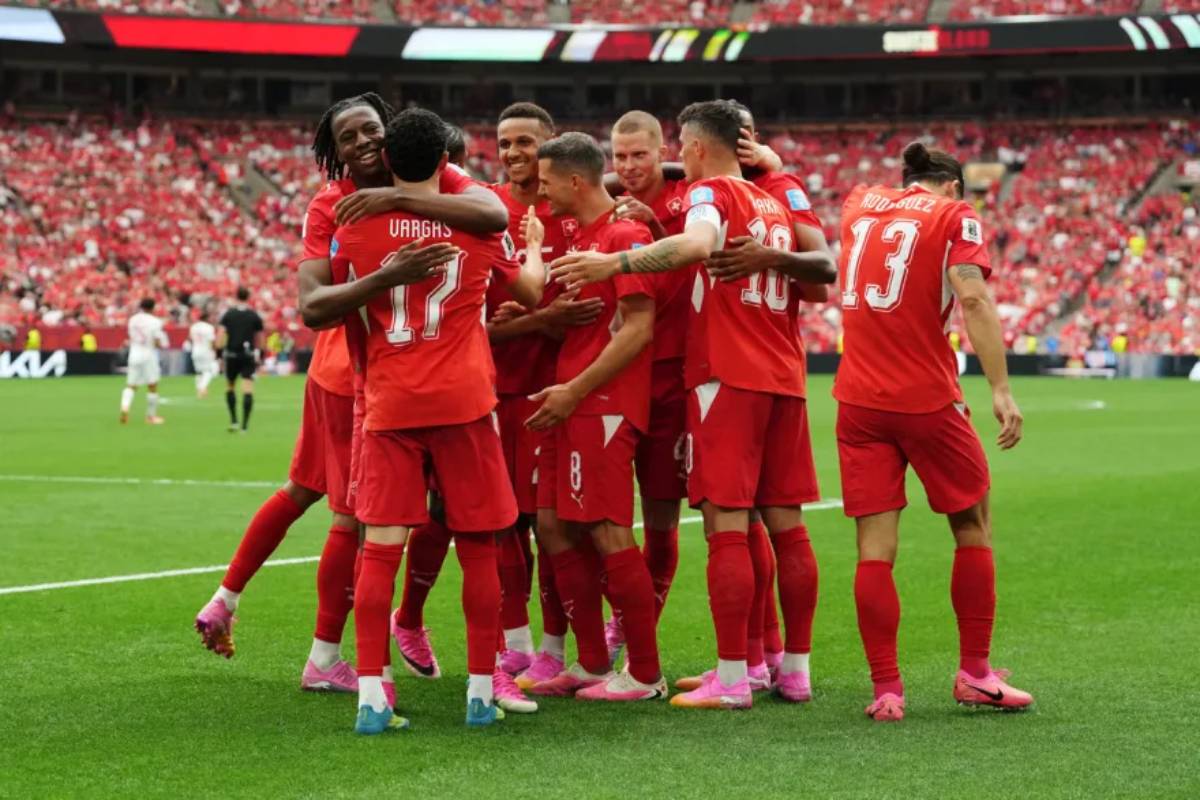
Switzerland’s national team has strengthened its position in the World Cup group standings following a decisive victory over Canada. The result not only boosts its qualification prospects but also underscores the country’s growing competitiveness on the global football stage, with implications for sports branding, national visibility, and international sporting momentum.
Switzerland secured a crucial win against Canada in its latest World Cup group-stage fixture, propelling the team to the top of its group standings. The match outcome reflects a strong tactical performance and improved consistency in international competition.
The victory significantly enhances Switzerland’s chances of advancing to the knockout stages, depending on remaining group fixtures. Canada, meanwhile, faces increased pressure to recover in subsequent matches to remain in contention.
The result has been closely followed by sports federations, broadcasters, and commercial stakeholders invested in tournament performance outcomes and associated sponsorship visibility.
International football tournaments like the World Cup represent not only sporting excellence but also major economic and branding ecosystems. National team performance directly influences media rights value, sponsorship activation, tourism visibility, and national soft power.
Switzerland has steadily improved its football profile over recent years, investing in youth development systems, tactical modernization, and international player integration. Canada, meanwhile, has been expanding its global football presence following increased investment in the sport and qualification cycles.
The group-stage dynamics are critical in determining tournament trajectories, where early wins can significantly reduce pressure in later fixtures. Historically, European teams with strong defensive organization, like Switzerland, often perform consistently in group formats, while emerging teams like Canada are still building competitive depth at this level.
Sports analysts highlight that Switzerland’s structured defensive strategy and efficient transition play have been key differentiators in its recent performances. Tactical experts note that the team’s discipline in maintaining shape under pressure has allowed it to control critical phases of matches.
Commentators also point out that Canada’s performance, while competitive, exposed gaps in defensive coordination and finishing efficiency at elite tournament levels. However, analysts emphasize that the Canadian squad remains in a developmental phase with significant long-term upside.
Football federation observers suggest that Switzerland’s consistency reflects broader investment in elite player development pathways and data-driven match preparation, increasingly common among top-tier national teams.
For sports businesses and sponsors, Switzerland’s strong World Cup performance enhances brand visibility, media valuation, and commercial engagement opportunities. Success in group stages often translates into higher broadcast ratings and increased merchandise demand.
For Canada, continued participation remains critical for sustaining fan engagement and attracting long-term investment in football infrastructure and youth programs.
From a broader policy perspective, national sports performance continues to influence funding decisions, talent development strategies, and international sporting partnerships. Governments and federations increasingly view football success as a soft power asset that contributes to national branding and global recognition.
Switzerland will now look to consolidate its position with upcoming group fixtures, where qualification certainty remains the primary objective. Canada must respond strongly in its remaining matches to keep advancement hopes alive. Analysts will closely monitor tactical adjustments, squad rotation strategies, and performance consistency as the group stage progresses toward its decisive final round.
Source: Swissinfo
Date: June 26, 2026


