
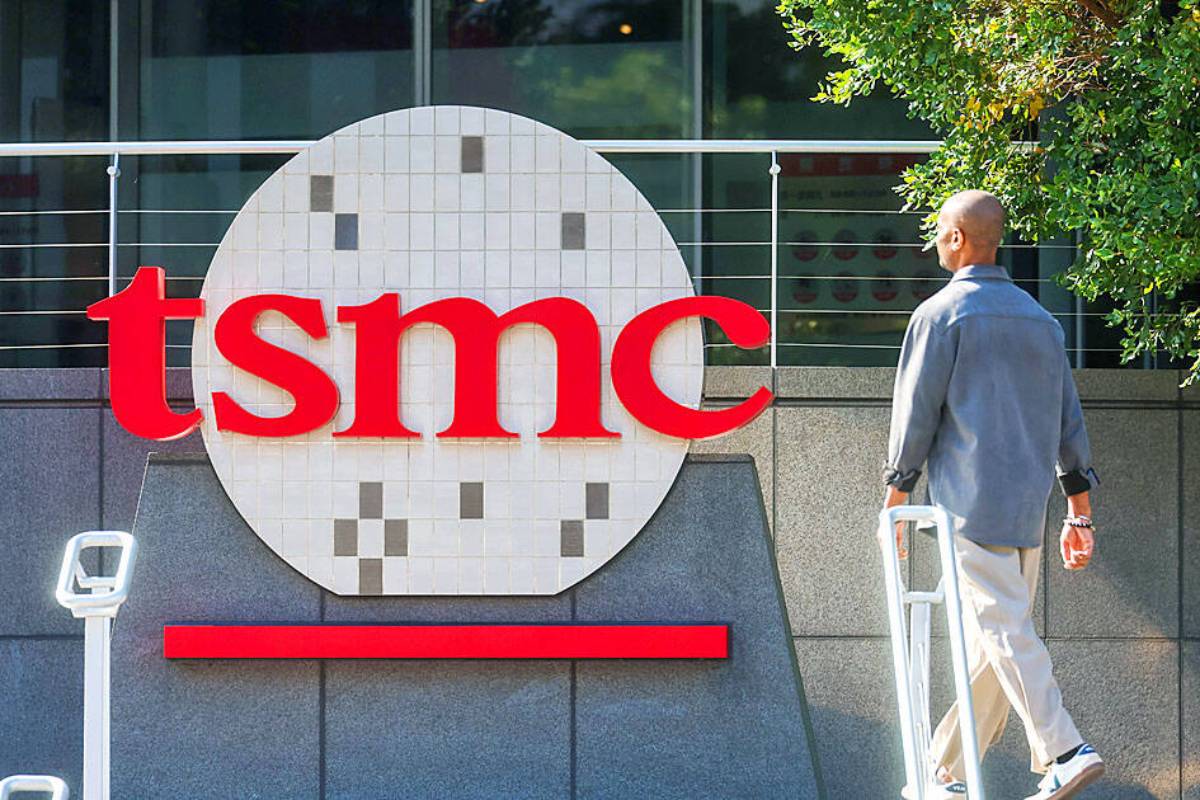
TSMC Signals AI Expansion Chip Pricing

TSMC executives have indicated confidence that AI-driven chip demand will remain strong well into the medium term, supported by accelerating adoption of advanced computing workloads.

June 4, 2026
|

Taiwan Semiconductor Manufacturing Co. (TSMC) is reinforcing its bullish stance on the artificial intelligence boom, with leadership signaling sustained demand strength and potential room for higher chip pricing. The outlook underscores the company’s central role in the global AI supply chain, with implications for semiconductor markets, cloud providers, and AI infrastructure builders.

TSMC executives have indicated confidence that AI-driven chip demand will remain strong well into the medium term, supported by accelerating adoption of advanced computing workloads. The company has also suggested that pricing power may increase as supply constraints persist in leading-edge semiconductors.

The comments come amid ongoing global competition for high-performance chips used in data centers, AI training clusters, and enterprise inference systems. TSMC remains the dominant manufacturer for advanced nodes, supplying major clients including AI chip designers and hyperscale cloud providers. The firm’s outlook highlights continued capital intensity in semiconductor fabrication and sustained pressure on global supply chains.

The semiconductor industry sits at the core of the global AI expansion cycle, with TSMC occupying a critical bottleneck position in advanced chip manufacturing. Over the past several years, demand for high-performance computing chips has surged due to generative AI models, large-scale training clusters, and enterprise AI deployment across industries.

This has led to structural shortages in advanced semiconductor capacity, particularly in nodes below 5 nanometers. Governments in the U.S., Europe, and Asia have also increased focus on semiconductor self-sufficiency, adding geopolitical complexity to global supply chains.

TSMC’s pricing leverage reflects a broader industry dynamic where supply remains concentrated among a small number of leading-edge manufacturers, while demand continues to accelerate from AI-first companies and cloud infrastructure providers.

Industry analysts interpret TSMC’s outlook as a strong signal that AI-related semiconductor demand has not yet peaked. Experts note that hyperscale cloud providers and AI model developers are continuing to front-load chip orders, creating sustained pressure on fabrication capacity.

Market strategists also highlight that pricing strength in advanced semiconductors typically reflects tight supply conditions and high switching costs, as alternative manufacturing sources remain limited at the cutting edge.

Some economists caution that while AI demand is robust, cyclicality in semiconductor markets could re-emerge if capital spending slows among major cloud players. However, the prevailing view among analysts is that AI infrastructure buildouts are entering a multi-year expansion phase, with TSMC positioned as a primary beneficiary.

For technology companies, rising semiconductor pricing could increase infrastructure costs for AI training and deployment, potentially impacting margins for cloud providers and AI startups. Investors may interpret TSMC’s outlook as validation of sustained AI capital expenditure cycles across the tech sector.

From a policy standpoint, the concentration of advanced chip manufacturing raises ongoing concerns about supply chain resilience and geopolitical risk. Governments may accelerate domestic semiconductor initiatives to reduce dependence on Taiwan-based fabrication. For enterprise leaders, the trend reinforces the strategic importance of securing long-term chip supply agreements in an increasingly constrained global market.

Market attention will now focus on whether AI-driven demand continues to outpace new fabrication capacity additions over the next 12–24 months. Any slowdown in hyperscaler spending or breakthrough in alternative chip manufacturing hubs could alter pricing dynamics. For now, TSMC’s position suggests continued tightness in the global semiconductor supply chain.

Source: Reuters
Date: June 4, 2026

  • Featured tools
WellSaid Ai
Free

WellSaid AI is an advanced text-to-speech platform that transforms written text into lifelike, human-quality voiceovers.

#
Text to Speech
Learn more
Upscayl AI
Free

Upscayl AI is a free, open-source AI-powered tool that enhances and upscales images to higher resolutions. It transforms blurry or low-quality visuals into sharp, detailed versions with ease.

#
Productivity
Learn more

Learn more about future of AI

Join 80,000+ Ai enthusiast getting weekly updates on exciting AI tools.
Thank you! Your submission has been received!
Oops! Something went wrong while submitting the form.

TSMC Signals AI Expansion Chip Pricing

June 4, 2026

TSMC executives have indicated confidence that AI-driven chip demand will remain strong well into the medium term, supported by accelerating adoption of advanced computing workloads.

Taiwan Semiconductor Manufacturing Co. (TSMC) is reinforcing its bullish stance on the artificial intelligence boom, with leadership signaling sustained demand strength and potential room for higher chip pricing. The outlook underscores the company’s central role in the global AI supply chain, with implications for semiconductor markets, cloud providers, and AI infrastructure builders.

TSMC executives have indicated confidence that AI-driven chip demand will remain strong well into the medium term, supported by accelerating adoption of advanced computing workloads. The company has also suggested that pricing power may increase as supply constraints persist in leading-edge semiconductors.

The comments come amid ongoing global competition for high-performance chips used in data centers, AI training clusters, and enterprise inference systems. TSMC remains the dominant manufacturer for advanced nodes, supplying major clients including AI chip designers and hyperscale cloud providers. The firm’s outlook highlights continued capital intensity in semiconductor fabrication and sustained pressure on global supply chains.

The semiconductor industry sits at the core of the global AI expansion cycle, with TSMC occupying a critical bottleneck position in advanced chip manufacturing. Over the past several years, demand for high-performance computing chips has surged due to generative AI models, large-scale training clusters, and enterprise AI deployment across industries.

This has led to structural shortages in advanced semiconductor capacity, particularly in nodes below 5 nanometers. Governments in the U.S., Europe, and Asia have also increased focus on semiconductor self-sufficiency, adding geopolitical complexity to global supply chains.

TSMC’s pricing leverage reflects a broader industry dynamic where supply remains concentrated among a small number of leading-edge manufacturers, while demand continues to accelerate from AI-first companies and cloud infrastructure providers.

Industry analysts interpret TSMC’s outlook as a strong signal that AI-related semiconductor demand has not yet peaked. Experts note that hyperscale cloud providers and AI model developers are continuing to front-load chip orders, creating sustained pressure on fabrication capacity.

Market strategists also highlight that pricing strength in advanced semiconductors typically reflects tight supply conditions and high switching costs, as alternative manufacturing sources remain limited at the cutting edge.

Some economists caution that while AI demand is robust, cyclicality in semiconductor markets could re-emerge if capital spending slows among major cloud players. However, the prevailing view among analysts is that AI infrastructure buildouts are entering a multi-year expansion phase, with TSMC positioned as a primary beneficiary.

For technology companies, rising semiconductor pricing could increase infrastructure costs for AI training and deployment, potentially impacting margins for cloud providers and AI startups. Investors may interpret TSMC’s outlook as validation of sustained AI capital expenditure cycles across the tech sector.

From a policy standpoint, the concentration of advanced chip manufacturing raises ongoing concerns about supply chain resilience and geopolitical risk. Governments may accelerate domestic semiconductor initiatives to reduce dependence on Taiwan-based fabrication. For enterprise leaders, the trend reinforces the strategic importance of securing long-term chip supply agreements in an increasingly constrained global market.

Market attention will now focus on whether AI-driven demand continues to outpace new fabrication capacity additions over the next 12–24 months. Any slowdown in hyperscaler spending or breakthrough in alternative chip manufacturing hubs could alter pricing dynamics. For now, TSMC’s position suggests continued tightness in the global semiconductor supply chain.

Source: Reuters
Date: June 4, 2026

Promote Your Tool

Copy Embed Code

Similar Blogs

June 4, 2026
|

Amazon Ring Faces Facial Recognition Scrutiny

Amazon’s Ring division is facing allegations that its facial recognition and AI-based monitoring features may violate privacy laws.
Read more
June 4, 2026
|

Microsoft Ends Office 2019 Mac Support

Microsoft has confirmed that Office 2019 for Mac will no longer receive a necessary update, limiting user functionality to read-only mode for certain file operations.
Read more
June 4, 2026
|

Apple iPhone Fold Enters Foldable Race

The anticipated iPhone Fold is expected to represent Apple’s first entry into the foldable smartphone category, a segment currently dominated by competing Android manufacturers.
Read more
June 4, 2026
|

Polaroid Launches Go Gen 3 Camera

The new Polaroid Go Generation 3 camera introduces incremental upgrades to the company’s compact instant camera lineup, focusing on portability, ease of use, and enhanced image output.
Read more
June 4, 2026
|

Supernatural VR Fitness Returns Independent Platform

Supernatural, a leading VR fitness application, is re-emerging as a standalone platform outside of major corporate ownership.
Read more
June 4, 2026
|

AI Progress Reveals Limits Transformation Promise

Recent analysis around AI development points to a widening gap between expectations and measurable economic outcomes. While models continue to improve in reasoning, generation, and automation tasks.
Read more