
Zcal Strengthens Personalized Digital Scheduling

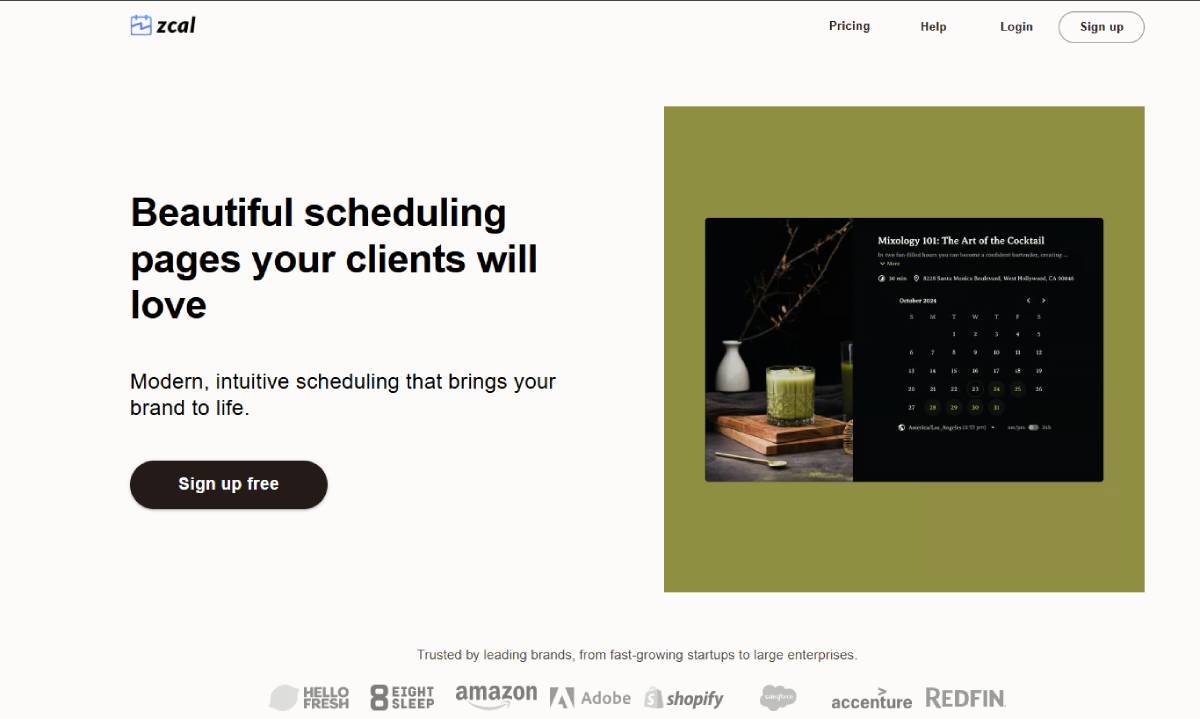
zcal enables users to create personalized scheduling links connected to their calendars, helping prevent conflicts and streamline appointment booking.

August 10, 2026
|

zcal is advancing digital scheduling with a platform designed to simplify meeting coordination while creating more personalized booking experiences. By combining calendar management, customizable scheduling pages, team coordination, and integrations, the solution targets businesses and professionals seeking to reduce administrative friction and improve how customers, prospects, and teams arrange meetings.

zcal enables users to create personalized scheduling links connected to their calendars, helping prevent conflicts and streamline appointment booking. Its capabilities extend across individual and team scheduling, including group meetings, collective scheduling, round-robin assignments, and meeting polls.

The platform also emphasizes customization, allowing users to incorporate branding elements and personalized booking experiences. Integrations with widely used calendar, video-conferencing, automation, payment, and analytics services expand its usefulness across business workflows. These capabilities position zcal within the growing scheduling technology market, where organizations increasingly seek tools that combine appointment coordination with customer engagement, productivity, and workflow automation.

Scheduling has become an increasingly important part of digital business operations as companies manage hybrid workforces, distributed teams, international customers, and increasingly complex appointment processes. Traditional back-and-forth communication for finding suitable meeting times creates unnecessary administrative work and can slow sales, recruiting, consulting, and customer-service activities.

The broader scheduling software market has therefore shifted toward automated booking, calendar synchronization, team coordination, integrations, and improved user experiences. Organizations increasingly view scheduling not simply as a productivity function but as an extension of customer experience.

zcal reflects this transition by combining scheduling functionality with personalization and collaboration features. Its positioning comes as businesses seek to create more seamless digital interactions while reducing operational friction. The competitive landscape remains crowded, however, with established scheduling providers and emerging platforms competing around automation, integrations, pricing, customization, and ease of use.

Technology analysts increasingly view scheduling platforms as important components of modern productivity and customer-engagement infrastructure. The value proposition extends beyond finding available meeting times: businesses can use scheduling technology to improve lead conversion, simplify service delivery, coordinate teams, and reduce repetitive administrative communication.

Industry observers also emphasize the importance of interoperability. Scheduling tools must work reliably with existing calendars, conferencing platforms, CRM systems, payment services, and automation ecosystems to become embedded in business workflows.

zcal's focus on personalized booking pages represents another emerging trend: treating the scheduling experience as part of a company's digital brand. Customization can allow businesses and professionals to create a more consistent experience for prospects and customers.

As competition intensifies, providers will increasingly be evaluated on reliability, security, integration depth, customization, and measurable productivity gains rather than basic calendar functionality alone.

For businesses, scheduling automation can reduce administrative workloads, accelerate customer interactions, and improve employee productivity. Sales teams can use streamlined booking workflows to reduce delays between prospects and representatives, while service organizations can simplify appointment management.

For executives, the strategic consideration is whether scheduling technology can become part of broader revenue and customer-experience workflows. Organizations should assess integration capabilities, data security, calendar permissions, privacy controls, and scalability before deploying such platforms across larger teams.

Investors should also watch the continued convergence between scheduling, CRM, automation, and productivity software. As digital interactions become increasingly automated, privacy and responsible handling of customer information will remain important considerations for businesses and regulators.

The scheduling technology market is likely to evolve toward greater automation, personalization, and artificial intelligence. Future platforms could offer predictive availability management, automated meeting preparation, intelligent attendee matching, and deeper integration with sales and customer-success systems. For decision-makers, the competitive advantage will increasingly come from using scheduling as a strategic workflow rather than a standalone calendar utility connecting convenience with productivity, customer experience, and revenue outcomes.

Source: Crozdesk
Date: August 10, 2026

  • Featured tools
Beautiful AI
Free

Beautiful AI is an AI-powered presentation platform that automates slide design and formatting, enabling users to create polished, on-brand presentations quickly.

#
Presentation
Learn more
Murf Ai
Free

Murf AI Review – Advanced AI Voice Generator for Realistic Voiceovers

#
Text to Speech
Learn more

Learn more about future of AI

Join 80,000+ Ai enthusiast getting weekly updates on exciting AI tools.
Thank you! Your submission has been received!
Oops! Something went wrong while submitting the form.

Zcal Strengthens Personalized Digital Scheduling

August 10, 2026

zcal enables users to create personalized scheduling links connected to their calendars, helping prevent conflicts and streamline appointment booking.

zcal is advancing digital scheduling with a platform designed to simplify meeting coordination while creating more personalized booking experiences. By combining calendar management, customizable scheduling pages, team coordination, and integrations, the solution targets businesses and professionals seeking to reduce administrative friction and improve how customers, prospects, and teams arrange meetings.

zcal enables users to create personalized scheduling links connected to their calendars, helping prevent conflicts and streamline appointment booking. Its capabilities extend across individual and team scheduling, including group meetings, collective scheduling, round-robin assignments, and meeting polls.

The platform also emphasizes customization, allowing users to incorporate branding elements and personalized booking experiences. Integrations with widely used calendar, video-conferencing, automation, payment, and analytics services expand its usefulness across business workflows. These capabilities position zcal within the growing scheduling technology market, where organizations increasingly seek tools that combine appointment coordination with customer engagement, productivity, and workflow automation.

Scheduling has become an increasingly important part of digital business operations as companies manage hybrid workforces, distributed teams, international customers, and increasingly complex appointment processes. Traditional back-and-forth communication for finding suitable meeting times creates unnecessary administrative work and can slow sales, recruiting, consulting, and customer-service activities.

The broader scheduling software market has therefore shifted toward automated booking, calendar synchronization, team coordination, integrations, and improved user experiences. Organizations increasingly view scheduling not simply as a productivity function but as an extension of customer experience.

zcal reflects this transition by combining scheduling functionality with personalization and collaboration features. Its positioning comes as businesses seek to create more seamless digital interactions while reducing operational friction. The competitive landscape remains crowded, however, with established scheduling providers and emerging platforms competing around automation, integrations, pricing, customization, and ease of use.

Technology analysts increasingly view scheduling platforms as important components of modern productivity and customer-engagement infrastructure. The value proposition extends beyond finding available meeting times: businesses can use scheduling technology to improve lead conversion, simplify service delivery, coordinate teams, and reduce repetitive administrative communication.

Industry observers also emphasize the importance of interoperability. Scheduling tools must work reliably with existing calendars, conferencing platforms, CRM systems, payment services, and automation ecosystems to become embedded in business workflows.

zcal's focus on personalized booking pages represents another emerging trend: treating the scheduling experience as part of a company's digital brand. Customization can allow businesses and professionals to create a more consistent experience for prospects and customers.

As competition intensifies, providers will increasingly be evaluated on reliability, security, integration depth, customization, and measurable productivity gains rather than basic calendar functionality alone.

For businesses, scheduling automation can reduce administrative workloads, accelerate customer interactions, and improve employee productivity. Sales teams can use streamlined booking workflows to reduce delays between prospects and representatives, while service organizations can simplify appointment management.

For executives, the strategic consideration is whether scheduling technology can become part of broader revenue and customer-experience workflows. Organizations should assess integration capabilities, data security, calendar permissions, privacy controls, and scalability before deploying such platforms across larger teams.

Investors should also watch the continued convergence between scheduling, CRM, automation, and productivity software. As digital interactions become increasingly automated, privacy and responsible handling of customer information will remain important considerations for businesses and regulators.

The scheduling technology market is likely to evolve toward greater automation, personalization, and artificial intelligence. Future platforms could offer predictive availability management, automated meeting preparation, intelligent attendee matching, and deeper integration with sales and customer-success systems. For decision-makers, the competitive advantage will increasingly come from using scheduling as a strategic workflow rather than a standalone calendar utility connecting convenience with productivity, customer experience, and revenue outcomes.

Source: Crozdesk
Date: August 10, 2026

Promote Your Tool

Copy Embed Code

Similar Blogs

August 13, 2026
|

Retail Inventory Software Drives Smarter Stock

Modern retail inventory platforms are designed to centralize information about products, stock levels, purchases and sales across physical and digital channels.
Read more
August 13, 2026
|

Coevera Advances AI-Driven Sales Management

Coevera combines visual sales pipeline management with automation, reporting and AI-assisted capabilities designed for modern sales organizations. Its platform enables teams to organize opportunities, monitor deal progression and centralize customer information.
Read more
August 13, 2026
|

Pipeline CRM Strengthens Sales Pipeline Management

Pipeline CRM provides tools designed to help sales teams manage contacts, leads, opportunities and customer interactions within a centralized environment. Its core focus is on making the sales pipeline easier to visualize and manage.
Read more
August 13, 2026
|

ContractWorks Advances Digital Contract Management

ContractWorks provides organizations with tools for storing, organizing and managing contracts in a centralized digital repository.
Read more
August 13, 2026
|

AlienVault USM Strengthens Cybersecurity Monitoring

AlienVault USM combines multiple security functions within a unified monitoring framework, including intrusion detection, vulnerability assessment, asset discovery, behavioral monitoring and security event management.
Read more
August 13, 2026
|

Plate IQ Advances Automated Payables Management

Plate IQ focuses on automating accounts payable workflows, helping organizations capture invoice information, organize financial data and manage supplier payments through a centralized digital environment.
Read more