



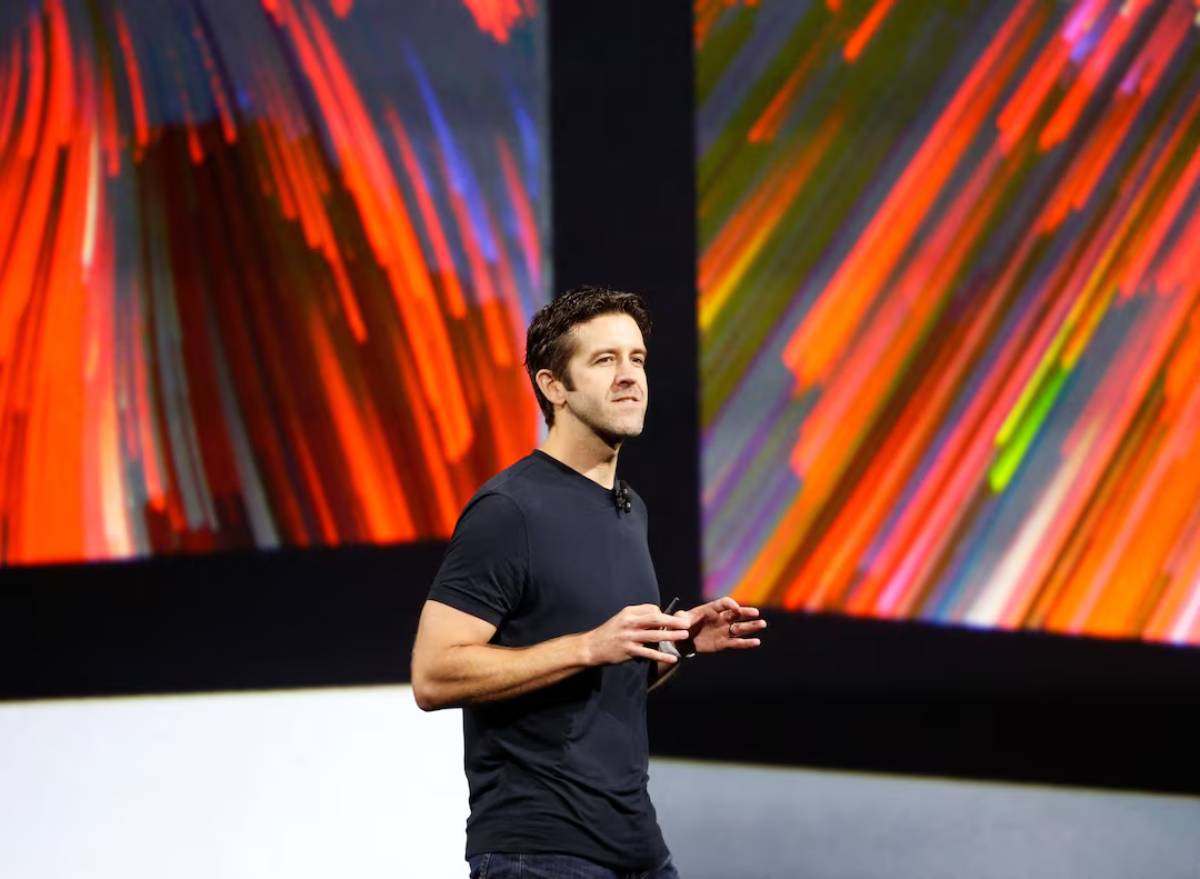
A major leadership transition unfolded as Apple appointed John Ternus as CEO, succeeding Tim Cook, who will move into an executive chairman role. The shift signals Apple’s strategic recalibration for the AI age, with implications for global tech competition, product innovation, and investor confidence.
Apple confirmed that John Ternus, its long-time hardware chief, will take over as CEO, marking one of the most significant leadership changes in the company’s recent history. Tim Cook, who led Apple for over a decade, will transition to executive chairman, maintaining strategic oversight.
Ternus has been instrumental in developing Apple’s core hardware portfolio, including iPhone, Mac, and silicon initiatives. His elevation suggests a renewed emphasis on tightly integrated hardware-software ecosystems in the AI era.
The transition comes at a time when competitors are aggressively advancing AI capabilities, prompting Apple to accelerate its own roadmap. Markets are closely watching how leadership continuity and innovation priorities will evolve under the new structure.
The development aligns with a broader trend across global markets where technology giants are restructuring leadership to align with the demands of artificial intelligence and next-generation computing. Apple, historically known for its hardware excellence and ecosystem control, faces increasing pressure to compete with AI-first rivals.
Under Tim Cook, Apple became one of the world’s most valuable companies, expanding services and optimizing supply chains. However, the generative AI boom led by firms like Microsoft and Google has shifted industry dynamics toward software-driven intelligence platforms.
Ternus’s appointment reflects Apple’s belief that the future of AI lies in deep integration with devices, particularly through on-device processing and custom silicon. This approach also intersects with geopolitical concerns around data privacy, localization, and supply chain resilience, areas where Apple has historically maintained tight control.
Industry analysts view Ternus as a continuity candidate with a strong operational track record, but also as a leader capable of steering Apple through a transformative phase. Experts suggest his hardware expertise could enable Apple to differentiate in AI by embedding intelligence directly into devices rather than relying heavily on cloud-based models.
Corporate observers note that Tim Cook’s move to executive chairman ensures strategic stability, particularly in areas such as global partnerships, regulatory navigation, and capital allocation. Apple has indicated that the leadership transition is part of a long-term succession plan rather than a reactive shift.
Market analysts emphasize that Apple’s AI strategy will likely prioritize privacy, efficiency, and user experience areas aligned with its brand identity. However, they caution that execution speed will be critical as competitors continue to scale AI capabilities rapidly.
For global executives, Apple’s leadership change signals a potential shift toward hardware-centric AI strategies, influencing how enterprises think about device ecosystems and edge computing. Companies may increasingly explore on-device AI solutions to address privacy and latency concerns.
Investors will closely evaluate Apple’s ability to translate leadership continuity into innovation momentum, particularly in AI-enabled products and services. The transition could also impact supplier ecosystems and semiconductor partnerships.
From a policy perspective, Apple’s approach may align with regulatory priorities around data protection and local processing, potentially shaping global standards for AI deployment. Governments may view Apple’s model as a benchmark for privacy-centric AI innovation.
Looking ahead, the success of John Ternus as CEO will hinge on how effectively he integrates AI into Apple’s product ecosystem while maintaining its design and privacy ethos. Decision-makers should watch for upcoming product launches, AI feature rollouts, and strategic acquisitions.
In the evolving AI era, leadership execution not just vision will determine competitive positioning.
Source: Reuters
Date: April 20, 2026


