
Asus Launches Secondary Touchscreen Display Push

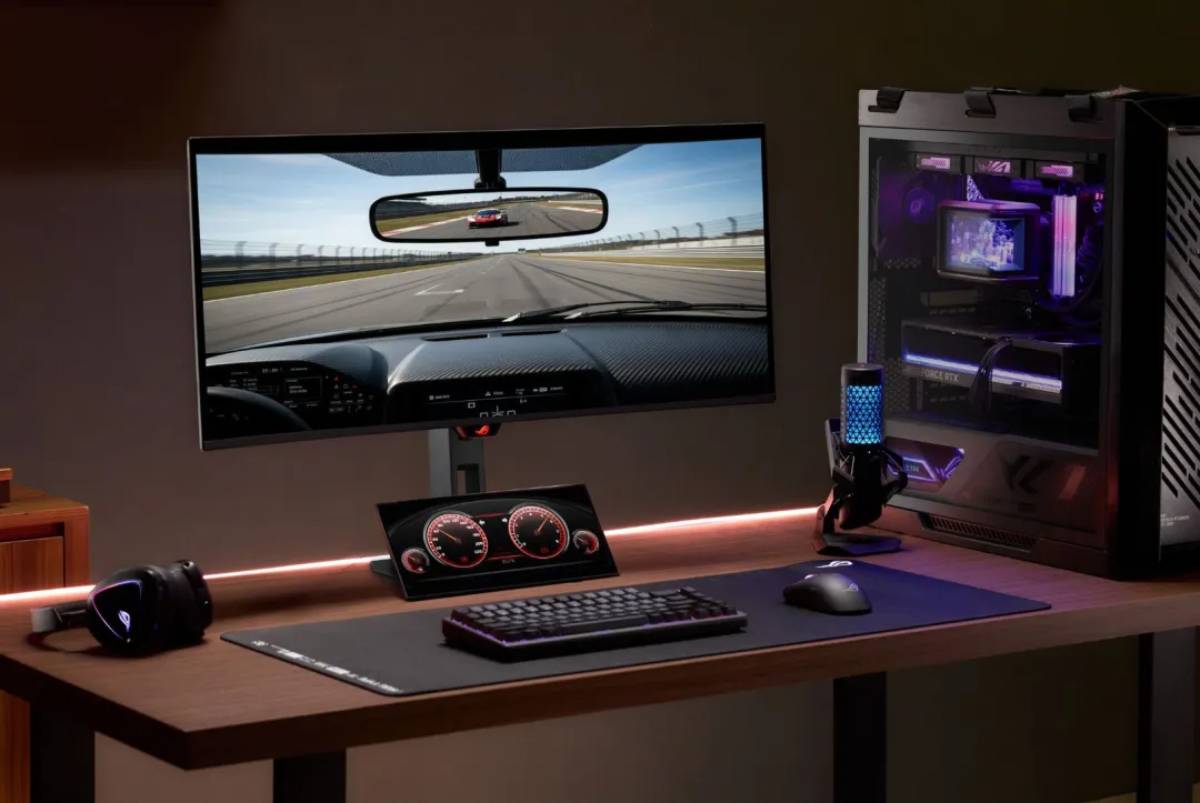
Asus has introduced a secondary touchscreen display designed to enhance workflow efficiency and real-time content control for creators and streamers.

May 11, 2026
|
Image Source:  The Verge

Asus is advancing deeper into the creator hardware segment with a new secondary touchscreen display aimed at competing with Elgato’s ecosystem. The move reflects growing demand for multi-screen productivity tools among streamers, gamers, and digital creators, signaling intensified competition in the peripheral market and expanding opportunities in modular computing accessories.

Asus has introduced a secondary touchscreen display designed to enhance workflow efficiency and real-time content control for creators and streamers. The device integrates as an auxiliary screen, enabling multitasking functions such as monitoring, control dashboards, and interactive overlays.

The product positions Asus in direct competition with Elgato, a dominant player in creator-focused hardware ecosystems. This expansion reflects Asus’s broader strategy to diversify beyond traditional PC hardware into creator-centric tools. The launch aligns with rising demand for multi-display setups in gaming, streaming, and professional content production environments, where real-time control and interface flexibility are increasingly essential.

The creator economy has accelerated demand for specialized hardware designed to optimize digital production workflows. Secondary displays, stream decks, and modular control surfaces have become essential tools for streamers, gamers, and professional content creators. This shift reflects a broader transformation in personal computing, where productivity is increasingly defined by multi-screen and adaptive interface environments.

Asus’s entry into this segment highlights the convergence of gaming hardware and content creation tools. Traditionally, PC manufacturers focused on core performance components such as GPUs and motherboards. However, the rise of streaming platforms and creator monetization models has expanded the value chain into peripheral ecosystems. Companies are now competing not only on raw hardware performance but also on usability, workflow optimization, and ecosystem integration tailored for digital creators.

Industry analysts note that the creator hardware market is evolving rapidly, driven by the professionalization of streaming and content production. One technology market observer stated that “peripheral innovation is becoming a key differentiator as computing hardware becomes increasingly standardized.”

Experts suggest that secondary displays and control surfaces significantly enhance productivity for live content creators, enabling real-time interaction without disrupting primary workflows. However, analysts also caution that the market is becoming crowded, with differentiation increasingly dependent on software integration and ecosystem compatibility.

Some industry voices highlight that Asus’s entry could intensify competition with established players like Elgato by leveraging its broader hardware distribution network. Success will depend on whether Asus can build a cohesive software layer that complements its hardware offerings and integrates seamlessly into creator workflows.

For businesses, Asus’s move reflects expanding monetization opportunities within the creator economy, where hardware and software integration increasingly define competitive advantage. Peripheral manufacturers may need to accelerate ecosystem development rather than rely solely on standalone product innovation.

For investors, the creator tools segment represents a high-growth niche within consumer electronics, driven by sustained demand from gaming, streaming, and digital production markets. On the consumer side, improved workflow tools enhance productivity and content quality, lowering barriers for entry-level creators.

While regulatory implications remain limited, increasing reliance on integrated digital ecosystems may eventually raise considerations around platform interoperability and data synchronization across creator tools.

The creator hardware market is expected to continue expanding as content production becomes more decentralized and professionalized. Future competition will likely focus on software ecosystems, AI-assisted workflow tools, and cross-device integration. Asus’s success will depend on its ability to build a compelling ecosystem around its hardware, competing not only on functionality but also on seamless creator experience design.

Source: The Verge
Date: 11 May 2026

  • Featured tools
Twistly AI
Paid

Twistly AI is a PowerPoint add-in that allows users to generate full slide decks, improve existing presentations, and convert various content types into polished slides directly within Microsoft PowerPoint.It streamlines presentation creation using AI-powered text analysis, image generation and content conversion.

#
Presentation
Learn more
Hostinger Horizons
Freemium

Hostinger Horizons is an AI-powered platform that allows users to build and deploy custom web applications without writing code. It packs hosting, domain management and backend integration into a unified tool for rapid app creation.

#
Startup Tools
#
Coding
#
Project Management
Learn more

Learn more about future of AI

Join 80,000+ Ai enthusiast getting weekly updates on exciting AI tools.
Thank you! Your submission has been received!
Oops! Something went wrong while submitting the form.

Asus Launches Secondary Touchscreen Display Push

May 11, 2026

Asus has introduced a secondary touchscreen display designed to enhance workflow efficiency and real-time content control for creators and streamers.

Image Source:  The Verge

Asus is advancing deeper into the creator hardware segment with a new secondary touchscreen display aimed at competing with Elgato’s ecosystem. The move reflects growing demand for multi-screen productivity tools among streamers, gamers, and digital creators, signaling intensified competition in the peripheral market and expanding opportunities in modular computing accessories.

Asus has introduced a secondary touchscreen display designed to enhance workflow efficiency and real-time content control for creators and streamers. The device integrates as an auxiliary screen, enabling multitasking functions such as monitoring, control dashboards, and interactive overlays.

The product positions Asus in direct competition with Elgato, a dominant player in creator-focused hardware ecosystems. This expansion reflects Asus’s broader strategy to diversify beyond traditional PC hardware into creator-centric tools. The launch aligns with rising demand for multi-display setups in gaming, streaming, and professional content production environments, where real-time control and interface flexibility are increasingly essential.

The creator economy has accelerated demand for specialized hardware designed to optimize digital production workflows. Secondary displays, stream decks, and modular control surfaces have become essential tools for streamers, gamers, and professional content creators. This shift reflects a broader transformation in personal computing, where productivity is increasingly defined by multi-screen and adaptive interface environments.

Asus’s entry into this segment highlights the convergence of gaming hardware and content creation tools. Traditionally, PC manufacturers focused on core performance components such as GPUs and motherboards. However, the rise of streaming platforms and creator monetization models has expanded the value chain into peripheral ecosystems. Companies are now competing not only on raw hardware performance but also on usability, workflow optimization, and ecosystem integration tailored for digital creators.

Industry analysts note that the creator hardware market is evolving rapidly, driven by the professionalization of streaming and content production. One technology market observer stated that “peripheral innovation is becoming a key differentiator as computing hardware becomes increasingly standardized.”

Experts suggest that secondary displays and control surfaces significantly enhance productivity for live content creators, enabling real-time interaction without disrupting primary workflows. However, analysts also caution that the market is becoming crowded, with differentiation increasingly dependent on software integration and ecosystem compatibility.

Some industry voices highlight that Asus’s entry could intensify competition with established players like Elgato by leveraging its broader hardware distribution network. Success will depend on whether Asus can build a cohesive software layer that complements its hardware offerings and integrates seamlessly into creator workflows.

For businesses, Asus’s move reflects expanding monetization opportunities within the creator economy, where hardware and software integration increasingly define competitive advantage. Peripheral manufacturers may need to accelerate ecosystem development rather than rely solely on standalone product innovation.

For investors, the creator tools segment represents a high-growth niche within consumer electronics, driven by sustained demand from gaming, streaming, and digital production markets. On the consumer side, improved workflow tools enhance productivity and content quality, lowering barriers for entry-level creators.

While regulatory implications remain limited, increasing reliance on integrated digital ecosystems may eventually raise considerations around platform interoperability and data synchronization across creator tools.

The creator hardware market is expected to continue expanding as content production becomes more decentralized and professionalized. Future competition will likely focus on software ecosystems, AI-assisted workflow tools, and cross-device integration. Asus’s success will depend on its ability to build a compelling ecosystem around its hardware, competing not only on functionality but also on seamless creator experience design.

Source: The Verge
Date: 11 May 2026

Promote Your Tool

Copy Embed Code

Similar Blogs

May 11, 2026
|

AI Lifestyle Scheduling Drives Wellness Era

AI-driven calendar automation tools are increasingly capable of designing full-day personal schedules based on user preferences, behavioral data, and predictive modeling.
Read more
May 11, 2026
|

Google Expands Gemini AI Ecosystem Push

Google is expected to unveil significant enhancements to its Gemini AI models, expanding their role across devices, applications, and developer platforms.
Read more
May 11, 2026
|

AI Home Tech Fraud Threat Grows

Cybersecurity analysts report a rise in AI-assisted scams involving smart home devices, fake customer support interactions, and automated phishing campaigns.
Read more
May 11, 2026
|

Google Expands Gemini AI Ecosystem Push

At Google I/O 2026, the company is expected to deepen integration of its Gemini AI models across devices and services, extending beyond software into hardware form factors such as smart glasses.
Read more
May 11, 2026
|

Apple M4 iPad Air Price Cuts Intensify Competition

Retail promotions have brought significant price reductions on Apple’s latest M4-powered iPad Air models, with discounts varying by configuration and storage tiers.
Read more
May 11, 2026
|

Microsoft Balances OpenAI Cloud Strategy Risk

Internal communications and strategic discussions within Microsoft reportedly highlighted fears that OpenAI could shift workloads or narratives toward Amazon Web Services.
Read more