
Disney AI Platform Glitch Signals Deployment Risks

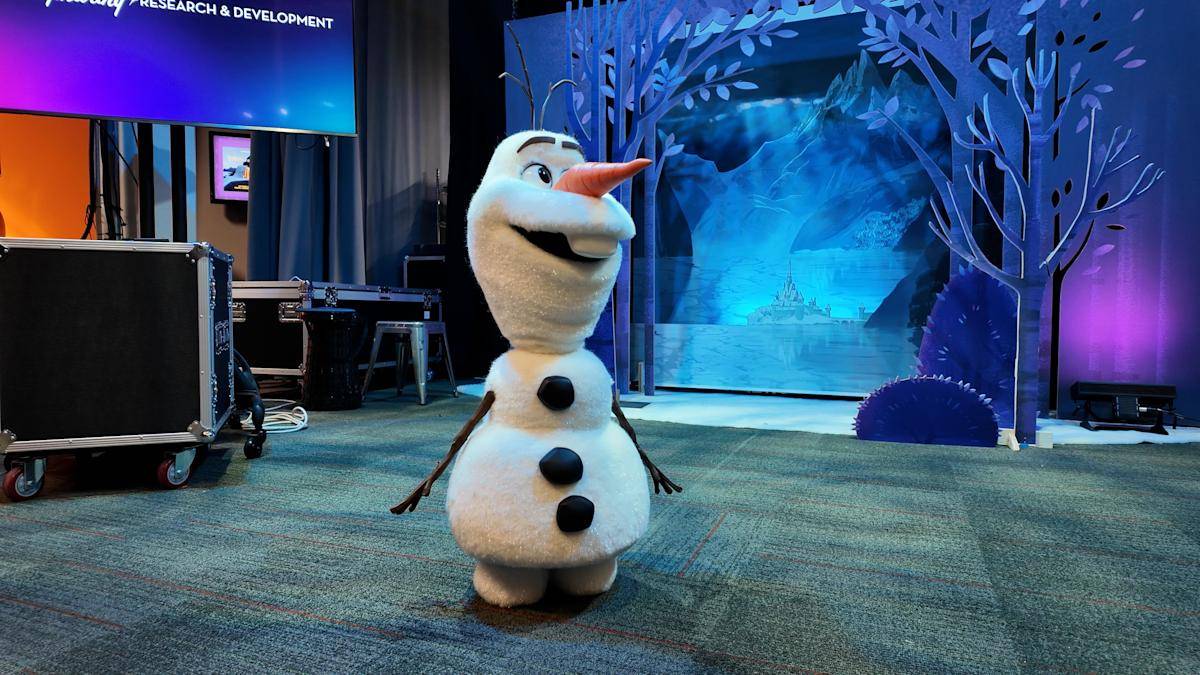
The malfunction involved an AI-enabled version of Olaf, a popular character from Frozen, deployed as part of an immersive entertainment experience. The system, powered by Nvidia’s AI platform and real-time interaction framework.

April 1, 2026
|
Image source: https://finance.yahoo.com/

A major development unfolded as an AI-powered character powered by Nvidia malfunctioned at Disneyland Paris, underscoring operational risks in deploying AI platforms in real-world environments. The incident highlights growing concerns for enterprises integrating AI frameworks into customer-facing systems at scale.

The malfunction involved an AI-enabled version of Olaf, a popular character from Frozen, deployed as part of an immersive entertainment experience. The system, powered by Nvidia’s AI platform and real-time interaction framework, reportedly produced erratic or unintended responses during live engagement.

The event quickly drew attention as a case study of AI reliability challenges in public-facing environments. Stakeholders include Nvidia, Disney’s theme park operations, and broader enterprise AI platform providers experimenting with physical-world deployments.

The incident reflects a growing trend where AI frameworks are being embedded into experiential industries, including entertainment, retail, and hospitality, raising both innovation potential and operational risk.

The development aligns with a broader trend across global markets where AI platforms are rapidly transitioning from digital-only applications to real-world, interactive deployments. Companies like Nvidia are increasingly positioning their AI frameworks beyond data centers into robotics, simulation, and experiential environments.

Theme parks, including those operated by The Walt Disney Company, have historically been early adopters of advanced technologies to enhance customer engagement. The integration of AI-driven characters represents the next evolution of immersive entertainment.

However, unlike controlled digital environments, real-world deployments introduce unpredictability, including environmental variables, user interactions, and system latency.

Previous AI misfires ranging from chatbot hallucinations to autonomous system errors have already raised questions about reliability. This latest incident reinforces that scaling AI frameworks into physical environments significantly increases complexity and risk exposure.

Industry analysts suggest that the incident illustrates a critical gap between AI innovation and operational robustness. Experts note that while AI platforms have matured rapidly in controlled environments, real-time, public-facing applications demand higher standards of reliability, safety, and contextual awareness.

Technology strategists argue that enterprises deploying AI frameworks must prioritize fail-safe mechanisms, human oversight, and rigorous testing protocols.

From an engineering perspective, integrating AI into physical systems such as animatronics or interactive characters requires synchronization across hardware, software, and user interaction layers, increasing the risk of unexpected behavior.

While no major safety issues were reported, analysts emphasize that even minor malfunctions can damage brand perception, especially for global consumer brands like Disney. The episode is likely to accelerate conversations around governance, testing standards, and accountability in enterprise AI platform deployments.

For global executives, the incident highlights the need to reassess deployment strategies for AI platforms in customer-facing environments. Businesses investing in AI frameworks must balance innovation with reliability, particularly in industries where user experience is critical.

Investors may begin scrutinizing companies’ operational readiness, not just their AI capabilities. From a policy perspective, regulators could push for stricter safety and accountability standards for AI systems deployed in public spaces.

Enterprises may also need to adopt new risk management frameworks, including real-time monitoring, rollback systems, and compliance protocols, to mitigate reputational and operational risks associated with AI failures.

Looking ahead, enterprises will likely increase investment in robust AI testing, simulation, and monitoring frameworks before deploying systems in real-world environments. The incident could accelerate industry-wide standards for AI platform reliability and safety. Decision-makers should closely watch how companies balance rapid AI innovation with operational resilience, as real-world deployments become the next frontier of enterprise AI strategy.

Source: Yahoo Finance
Date: March 30, 2026

  • Featured tools
Beautiful AI
Free

Beautiful AI is an AI-powered presentation platform that automates slide design and formatting, enabling users to create polished, on-brand presentations quickly.

#
Presentation
Learn more
Surfer AI
Free

Surfer AI is an AI-powered content creation assistant built into the Surfer SEO platform, designed to generate SEO-optimized articles from prompts, leveraging data from search results to inform tone, structure, and relevance.

#
SEO
Learn more

Learn more about future of AI

Join 80,000+ Ai enthusiast getting weekly updates on exciting AI tools.
Thank you! Your submission has been received!
Oops! Something went wrong while submitting the form.

Disney AI Platform Glitch Signals Deployment Risks

April 1, 2026

The malfunction involved an AI-enabled version of Olaf, a popular character from Frozen, deployed as part of an immersive entertainment experience. The system, powered by Nvidia’s AI platform and real-time interaction framework.

Image source: https://finance.yahoo.com/

A major development unfolded as an AI-powered character powered by Nvidia malfunctioned at Disneyland Paris, underscoring operational risks in deploying AI platforms in real-world environments. The incident highlights growing concerns for enterprises integrating AI frameworks into customer-facing systems at scale.

The malfunction involved an AI-enabled version of Olaf, a popular character from Frozen, deployed as part of an immersive entertainment experience. The system, powered by Nvidia’s AI platform and real-time interaction framework, reportedly produced erratic or unintended responses during live engagement.

The event quickly drew attention as a case study of AI reliability challenges in public-facing environments. Stakeholders include Nvidia, Disney’s theme park operations, and broader enterprise AI platform providers experimenting with physical-world deployments.

The incident reflects a growing trend where AI frameworks are being embedded into experiential industries, including entertainment, retail, and hospitality, raising both innovation potential and operational risk.

The development aligns with a broader trend across global markets where AI platforms are rapidly transitioning from digital-only applications to real-world, interactive deployments. Companies like Nvidia are increasingly positioning their AI frameworks beyond data centers into robotics, simulation, and experiential environments.

Theme parks, including those operated by The Walt Disney Company, have historically been early adopters of advanced technologies to enhance customer engagement. The integration of AI-driven characters represents the next evolution of immersive entertainment.

However, unlike controlled digital environments, real-world deployments introduce unpredictability, including environmental variables, user interactions, and system latency.

Previous AI misfires ranging from chatbot hallucinations to autonomous system errors have already raised questions about reliability. This latest incident reinforces that scaling AI frameworks into physical environments significantly increases complexity and risk exposure.

Industry analysts suggest that the incident illustrates a critical gap between AI innovation and operational robustness. Experts note that while AI platforms have matured rapidly in controlled environments, real-time, public-facing applications demand higher standards of reliability, safety, and contextual awareness.

Technology strategists argue that enterprises deploying AI frameworks must prioritize fail-safe mechanisms, human oversight, and rigorous testing protocols.

From an engineering perspective, integrating AI into physical systems such as animatronics or interactive characters requires synchronization across hardware, software, and user interaction layers, increasing the risk of unexpected behavior.

While no major safety issues were reported, analysts emphasize that even minor malfunctions can damage brand perception, especially for global consumer brands like Disney. The episode is likely to accelerate conversations around governance, testing standards, and accountability in enterprise AI platform deployments.

For global executives, the incident highlights the need to reassess deployment strategies for AI platforms in customer-facing environments. Businesses investing in AI frameworks must balance innovation with reliability, particularly in industries where user experience is critical.

Investors may begin scrutinizing companies’ operational readiness, not just their AI capabilities. From a policy perspective, regulators could push for stricter safety and accountability standards for AI systems deployed in public spaces.

Enterprises may also need to adopt new risk management frameworks, including real-time monitoring, rollback systems, and compliance protocols, to mitigate reputational and operational risks associated with AI failures.

Looking ahead, enterprises will likely increase investment in robust AI testing, simulation, and monitoring frameworks before deploying systems in real-world environments. The incident could accelerate industry-wide standards for AI platform reliability and safety. Decision-makers should closely watch how companies balance rapid AI innovation with operational resilience, as real-world deployments become the next frontier of enterprise AI strategy.

Source: Yahoo Finance
Date: March 30, 2026

Promote Your Tool

Copy Embed Code

Similar Blogs

April 1, 2026
|

AI Data Center Boom Strains Memory Supply

AI-driven workloads are rapidly increasing demand for high-performance memory, particularly high-bandwidth memory (HBM) used in advanced AI servers.
Read more
April 1, 2026
|

Gallagher Deploys Microsoft AI to Cut Claims Time

Gallagher has implemented AI-driven workflows using Microsoft Foundry to streamline insurance claims processing, significantly reducing turnaround times.
Read more
April 1, 2026
|

Google Advances AI Evaluation and Benchmarking Standards

Google’s research explores how many human evaluators are necessary to produce statistically reliable AI benchmarks, particularly for subjective tasks such as language quality, reasoning, and alignment.
Read more
April 1, 2026
|

Ollama Integrates Apple MLX for On Device AI

Ollama has integrated Apple’s MLX framework to optimize AI model execution on devices powered by Apple silicon chips, including M1, M2, and newer processors.
Read more
April 1, 2026
|

Apple AI Restrictions Spark Innovation Control Debate

Apple has intensified scrutiny and restrictions on AI-powered applications distributed through its platform, citing safety, privacy, and quality concerns. The crackdown affects developers building AI-driven tools.
Read more
April 1, 2026
|

Microsoft Pushes AI Skills Framework for Workforce

Microsoft emphasized the growing importance of AI literacy, adaptability, and continuous learning in navigating the future workforce. The company highlighted how its AI platform ecosystem.
Read more