
Google Gemini Expansion Faces Quality Scrutiny

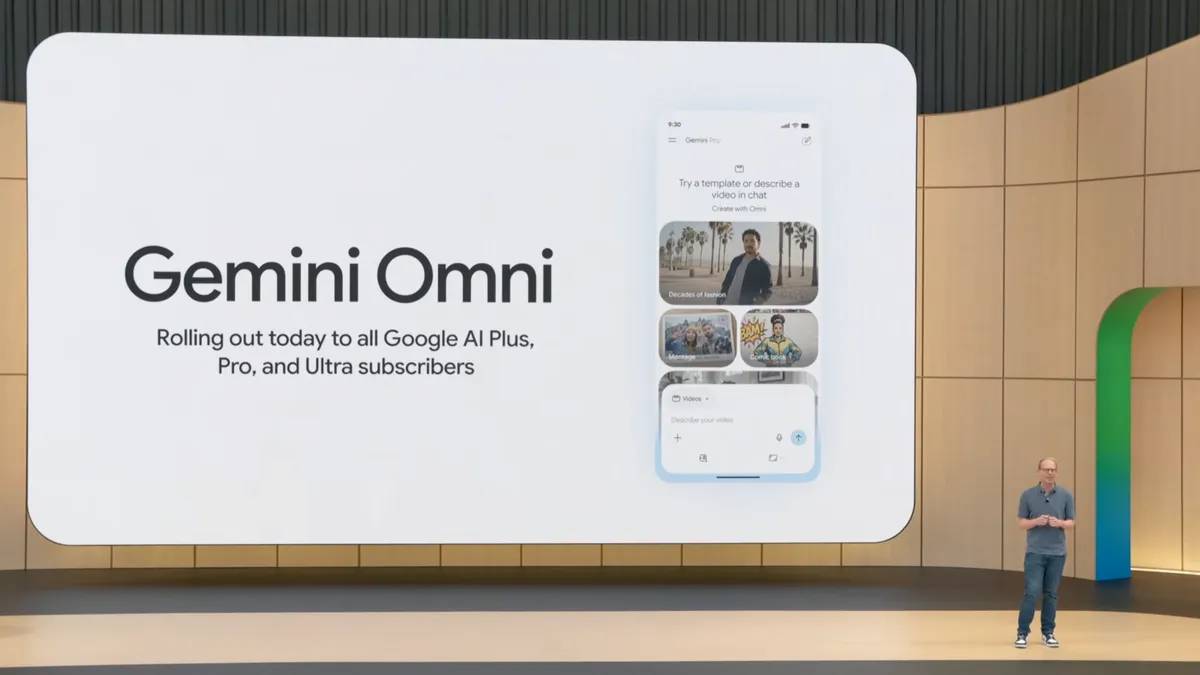
The latest commentary surrounding Gemini focuses on concerns that broader model expansion particularly multi-capability “Omni” systems could contribute to a surge in low-quality or redundant AI-generated content.

May 20, 2026
|
Image Source:  CNET

The expansion of Gemini under the “Omni” direction is drawing scrutiny over concerns about declining content quality and increasing volumes of low-value AI-generated output. The debate highlights growing tension between rapid AI scaling and trust, raising questions for enterprises, platforms, and regulators navigating the next phase of generative AI deployment.

The latest commentary surrounding Gemini focuses on concerns that broader model expansion particularly multi-capability “Omni” systems could contribute to a surge in low-quality or redundant AI-generated content.

Critics argue that as AI models become more accessible and widely integrated, the internet may see increased volumes of repetitive or unverified outputs. The discussion also touches on risks for developers and platforms relying on generative systems at scale.

At the same time, Google continues to position Gemini as a foundational AI layer across its ecosystem, integrating it into productivity tools, search, and developer platforms. The tension between scale and content integrity remains central to the debate.

Generative AI systems have rapidly evolved from experimental tools into core infrastructure for search, productivity, and content creation. However, this expansion has also introduced concerns around content reliability, accuracy, and originality.

Gemini sits at the center of this transformation as Google integrates its AI models across consumer and enterprise products. The “AI slop” critique reflects broader industry anxiety about information quality degradation as automated content generation becomes more prevalent.

Historically, major technology shifts such as search engine optimization and social media algorithms have also triggered similar concerns about content dilution. In the current cycle, the speed and scale of generative AI adoption are amplifying these risks, prompting renewed focus on governance, model evaluation, and content verification frameworks across the industry.

Industry analysts argue that the challenge is not merely technical but structural, as generative models increasingly shape how information is produced and consumed at scale. Experts suggest that without stronger filtering mechanisms, AI-generated ecosystems could become saturated with low-value content, reducing overall information trust.

Google has positioned Gemini as a next-generation AI system designed to improve productivity and contextual understanding across applications. However, observers note that balancing openness, usability, and content quality remains a persistent challenge.

Technology researchers emphasize that the “quality versus scale” debate will define the next phase of AI competition. Some analysts believe that future differentiation among AI providers will depend less on raw capability and more on trust, reliability, and content governance frameworks integrated into model outputs.

For businesses, concerns about AI-generated content quality could influence adoption strategies, particularly in sectors reliant on accurate information such as media, education, and enterprise knowledge systems. Companies may need additional validation layers when integrating generative AI outputs.

For investors, the debate signals emerging differentiation risks among AI platforms, where trust and content integrity may become key value drivers alongside performance metrics.

For policymakers, increasing volumes of AI-generated content raise regulatory considerations around misinformation, transparency, and labeling requirements. Governments may need to define clearer standards for synthetic content disclosure and accountability as generative systems become more deeply embedded in digital infrastructure.

The next phase of development for Gemini will likely focus on balancing expansion with stronger quality controls and trust mechanisms. Industry watchers will monitor whether AI providers introduce more robust filtering, provenance tracking, or verification systems. As generative AI scales further, the central challenge will be maintaining information integrity while preserving innovation and accessibility across global digital ecosystems.

Source: CNET
Date: 2026-05-20

  • Featured tools
Copy Ai
Free

Copy AI is one of the most popular AI writing tools designed to help professionals create high-quality content quickly. Whether you are a product manager drafting feature descriptions or a marketer creating ad copy, Copy AI can save hours of work while maintaining creativity and tone.

#
Copywriting
Learn more
Writesonic AI
Free

Writesonic AI is a versatile AI writing platform designed for marketers, entrepreneurs, and content creators. It helps users create blog posts, ad copies, product descriptions, social media posts, and more with ease. With advanced AI models and user-friendly tools, Writesonic streamlines content production and saves time for busy professionals.

#
Copywriting
Learn more

Learn more about future of AI

Join 80,000+ Ai enthusiast getting weekly updates on exciting AI tools.
Thank you! Your submission has been received!
Oops! Something went wrong while submitting the form.

Google Gemini Expansion Faces Quality Scrutiny

May 20, 2026

The latest commentary surrounding Gemini focuses on concerns that broader model expansion particularly multi-capability “Omni” systems could contribute to a surge in low-quality or redundant AI-generated content.

Image Source:  CNET

The expansion of Gemini under the “Omni” direction is drawing scrutiny over concerns about declining content quality and increasing volumes of low-value AI-generated output. The debate highlights growing tension between rapid AI scaling and trust, raising questions for enterprises, platforms, and regulators navigating the next phase of generative AI deployment.

The latest commentary surrounding Gemini focuses on concerns that broader model expansion particularly multi-capability “Omni” systems could contribute to a surge in low-quality or redundant AI-generated content.

Critics argue that as AI models become more accessible and widely integrated, the internet may see increased volumes of repetitive or unverified outputs. The discussion also touches on risks for developers and platforms relying on generative systems at scale.

At the same time, Google continues to position Gemini as a foundational AI layer across its ecosystem, integrating it into productivity tools, search, and developer platforms. The tension between scale and content integrity remains central to the debate.

Generative AI systems have rapidly evolved from experimental tools into core infrastructure for search, productivity, and content creation. However, this expansion has also introduced concerns around content reliability, accuracy, and originality.

Gemini sits at the center of this transformation as Google integrates its AI models across consumer and enterprise products. The “AI slop” critique reflects broader industry anxiety about information quality degradation as automated content generation becomes more prevalent.

Historically, major technology shifts such as search engine optimization and social media algorithms have also triggered similar concerns about content dilution. In the current cycle, the speed and scale of generative AI adoption are amplifying these risks, prompting renewed focus on governance, model evaluation, and content verification frameworks across the industry.

Industry analysts argue that the challenge is not merely technical but structural, as generative models increasingly shape how information is produced and consumed at scale. Experts suggest that without stronger filtering mechanisms, AI-generated ecosystems could become saturated with low-value content, reducing overall information trust.

Google has positioned Gemini as a next-generation AI system designed to improve productivity and contextual understanding across applications. However, observers note that balancing openness, usability, and content quality remains a persistent challenge.

Technology researchers emphasize that the “quality versus scale” debate will define the next phase of AI competition. Some analysts believe that future differentiation among AI providers will depend less on raw capability and more on trust, reliability, and content governance frameworks integrated into model outputs.

For businesses, concerns about AI-generated content quality could influence adoption strategies, particularly in sectors reliant on accurate information such as media, education, and enterprise knowledge systems. Companies may need additional validation layers when integrating generative AI outputs.

For investors, the debate signals emerging differentiation risks among AI platforms, where trust and content integrity may become key value drivers alongside performance metrics.

For policymakers, increasing volumes of AI-generated content raise regulatory considerations around misinformation, transparency, and labeling requirements. Governments may need to define clearer standards for synthetic content disclosure and accountability as generative systems become more deeply embedded in digital infrastructure.

The next phase of development for Gemini will likely focus on balancing expansion with stronger quality controls and trust mechanisms. Industry watchers will monitor whether AI providers introduce more robust filtering, provenance tracking, or verification systems. As generative AI scales further, the central challenge will be maintaining information integrity while preserving innovation and accessibility across global digital ecosystems.

Source: CNET
Date: 2026-05-20

Promote Your Tool

Copy Embed Code

Similar Blogs

May 20, 2026
|

Google Gemini Expansion Faces Quality Scrutiny

The latest commentary surrounding Gemini focuses on concerns that broader model expansion particularly multi-capability “Omni” systems could contribute to a surge in low-quality or redundant AI-generated content.
Read more
May 20, 2026
|

US Strengthens Digital Safety Content Laws

The Take It Down Act establishes a structured process for individuals to request removal of nonconsensual intimate imagery from online platforms.
Read more
May 20, 2026
|

Google Samsung Push AI Smart Glasses

Google and Samsung have confirmed plans to introduce AI-enabled smart glasses this fall, developed in collaboration with Warby Parker and Gentle Monster.
Read more
May 20, 2026
|

Google Expands AI Studio to Android Apps

Google announced the launch of an Android version of its AI Studio platform, enabling developers to build, test, and deploy AI applications directly from mobile devices.
Read more
May 20, 2026
|

Plex Raises Lifetime Pass Price Sharply

Plex has raised the cost of its lifetime Plex Pass subscription to $750, marking a substantial escalation after a previous price increase.
Read more
May 20, 2026
|

Google Turns Wear OS 7 Into Information Hub

Wear OS 7 introduces enhanced widgets and live data integration, allowing users to track package deliveries, sports scores, and other time-sensitive updates directly from their smartwatches.
Read more