
Google Overhauls Search Amid AI Competition

Google has unveiled a sweeping expansion of AI-powered search capabilities aimed at defending its dominance against emerging AI challengers such as ChatGPT, Perplexity, Anthropic, and other conversational search platforms.

May 21, 2026
|
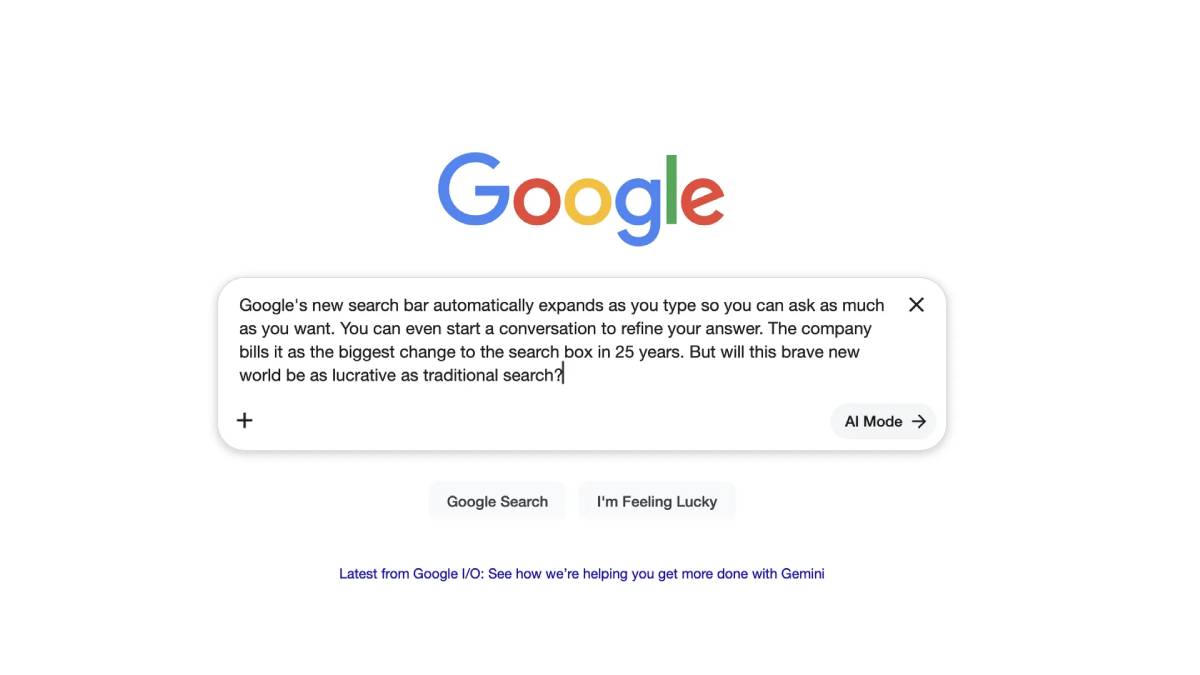
Image Source: Axios

A major transformation is underway in the global search industry as Google accelerates its AI-driven reinvention of Search to counter mounting competition from generative AI platforms and conversational agents. The strategic shift reflects growing pressure on the company’s core business model and signals a broader restructuring of how information is accessed online.

Google has unveiled a sweeping expansion of AI-powered search capabilities aimed at defending its dominance against emerging AI challengers such as ChatGPT, Perplexity, Anthropic, and other conversational search platforms. The company is integrating advanced AI agents, multimodal interfaces, and proactive assistance directly into Search, moving beyond traditional keyword-based browsing.

The updates announced around Google I/O 2026 highlight a transition toward conversational and task-oriented experiences where users can receive synthesized answers, automated recommendations, and contextual assistance. Google executives have framed the initiative as a fundamental redesign of the search experience rather than a simple feature upgrade.

The move comes as AI-native competitors increasingly threaten Google’s advertising-driven ecosystem by changing how consumers discover information, products, and services online. Investors and industry analysts are closely watching whether AI-enhanced search can preserve Google’s market leadership while maintaining profitability.

The development reflects one of the most consequential shifts in internet economics since the rise of mobile computing. For over two decades, Google Search has served as the primary gateway to the web, generating enormous advertising revenue while shaping global digital behavior.

However, the emergence of generative AI has disrupted traditional search dynamics. Consumers are increasingly turning to conversational AI assistants that provide direct answers instead of lists of links, reducing reliance on conventional search engines. This trend has created strategic urgency for Google, whose advertising business remains heavily tied to user search activity.

The AI search race intensified following the explosive adoption of ChatGPT and subsequent launches of AI-powered assistants across the technology sector. Companies including Microsoft, OpenAI, Anthropic, Meta, and startups like Perplexity have accelerated investments in AI interfaces capable of summarizing information, automating tasks, and delivering more personalized experiences.

The transition also carries broader geopolitical and economic implications. Artificial intelligence is now viewed as a critical strategic technology influencing productivity, national competitiveness, cloud infrastructure, cybersecurity, and digital sovereignty. Governments and regulators are increasingly scrutinizing how dominant tech platforms deploy AI systems while balancing competition, transparency, and public trust.

Industry analysts describe Google’s AI search overhaul as both a defensive necessity and a long-term strategic recalibration. Technology experts argue that the company is attempting to modernize its core product before competitors fundamentally redefine how users interact with information online.

Executives across the AI sector have acknowledged that conversational interfaces are rapidly becoming central to digital experiences. Analysts believe Google’s vast data ecosystem, cloud infrastructure, and advertising reach still provide a significant competitive advantage, but they warn that AI-native challengers are moving faster in user engagement innovation.

Market strategists also note that Google faces a delicate balancing act. Expanding AI-generated responses could improve user experience while simultaneously disrupting the advertising model that powers much of the company’s revenue. Questions remain around monetization, content attribution, and the long-term sustainability of AI-generated search ecosystems.

Meanwhile, publishers, advertisers, and digital businesses are closely monitoring how AI summaries may reduce traffic to websites. Industry observers expect intensifying debates around copyright, content licensing, and fair compensation as AI-generated search becomes more mainstream.

For businesses, Google’s AI transformation signals that search engine optimization, digital advertising, and online customer acquisition strategies may undergo significant restructuring. Companies may need to adapt content strategies for AI-generated summaries and conversational discovery systems rather than traditional search rankings alone.

Investors are also reassessing the competitive landscape of the internet economy. The outcome of the AI search battle could influence valuations across cloud computing, advertising technology, semiconductors, enterprise AI software, and consumer platforms.

For policymakers, the rapid evolution of AI-powered search raises concerns around market concentration, misinformation, transparency, and data governance. Regulators in the United States and Europe are likely to intensify scrutiny of how major technology companies integrate AI into dominant digital ecosystems.

Consumers, meanwhile, may benefit from more intuitive and personalized online experiences, though concerns persist around accuracy, algorithmic bias, and overreliance on AI-generated information.

The next phase of the AI search race will likely focus on user adoption, monetization, and trust. Technology leaders will closely watch whether Google can successfully evolve its search empire without undermining the advertising infrastructure that fuels its business.

As conversational AI becomes increasingly integrated into everyday digital life, the broader battle may no longer be about search engines alone — but about who ultimately controls the future gateway to information, commerce, and online decision-making.

Source: Axios
Date: May 20, 2026

  • Featured tools
Kreateable AI
Free

Kreateable AI is a white-label, AI-driven design platform that enables logo generation, social media posts, ads, and more for businesses, agencies, and service providers.

#
Logo Generator
Learn more
Tome AI
Free

Tome AI is an AI-powered storytelling and presentation tool designed to help users create compelling narratives and presentations quickly and efficiently. It leverages advanced AI technologies to generate content, images, and animations based on user input.

#
Presentation
#
Startup Tools
Learn more

Learn more about future of AI

Join 80,000+ Ai enthusiast getting weekly updates on exciting AI tools.
Thank you! Your submission has been received!
Oops! Something went wrong while submitting the form.

Google Overhauls Search Amid AI Competition

May 21, 2026

Google has unveiled a sweeping expansion of AI-powered search capabilities aimed at defending its dominance against emerging AI challengers such as ChatGPT, Perplexity, Anthropic, and other conversational search platforms.

Image Source: Axios

A major transformation is underway in the global search industry as Google accelerates its AI-driven reinvention of Search to counter mounting competition from generative AI platforms and conversational agents. The strategic shift reflects growing pressure on the company’s core business model and signals a broader restructuring of how information is accessed online.

Google has unveiled a sweeping expansion of AI-powered search capabilities aimed at defending its dominance against emerging AI challengers such as ChatGPT, Perplexity, Anthropic, and other conversational search platforms. The company is integrating advanced AI agents, multimodal interfaces, and proactive assistance directly into Search, moving beyond traditional keyword-based browsing.

The updates announced around Google I/O 2026 highlight a transition toward conversational and task-oriented experiences where users can receive synthesized answers, automated recommendations, and contextual assistance. Google executives have framed the initiative as a fundamental redesign of the search experience rather than a simple feature upgrade.

The move comes as AI-native competitors increasingly threaten Google’s advertising-driven ecosystem by changing how consumers discover information, products, and services online. Investors and industry analysts are closely watching whether AI-enhanced search can preserve Google’s market leadership while maintaining profitability.

The development reflects one of the most consequential shifts in internet economics since the rise of mobile computing. For over two decades, Google Search has served as the primary gateway to the web, generating enormous advertising revenue while shaping global digital behavior.

However, the emergence of generative AI has disrupted traditional search dynamics. Consumers are increasingly turning to conversational AI assistants that provide direct answers instead of lists of links, reducing reliance on conventional search engines. This trend has created strategic urgency for Google, whose advertising business remains heavily tied to user search activity.

The AI search race intensified following the explosive adoption of ChatGPT and subsequent launches of AI-powered assistants across the technology sector. Companies including Microsoft, OpenAI, Anthropic, Meta, and startups like Perplexity have accelerated investments in AI interfaces capable of summarizing information, automating tasks, and delivering more personalized experiences.

The transition also carries broader geopolitical and economic implications. Artificial intelligence is now viewed as a critical strategic technology influencing productivity, national competitiveness, cloud infrastructure, cybersecurity, and digital sovereignty. Governments and regulators are increasingly scrutinizing how dominant tech platforms deploy AI systems while balancing competition, transparency, and public trust.

Industry analysts describe Google’s AI search overhaul as both a defensive necessity and a long-term strategic recalibration. Technology experts argue that the company is attempting to modernize its core product before competitors fundamentally redefine how users interact with information online.

Executives across the AI sector have acknowledged that conversational interfaces are rapidly becoming central to digital experiences. Analysts believe Google’s vast data ecosystem, cloud infrastructure, and advertising reach still provide a significant competitive advantage, but they warn that AI-native challengers are moving faster in user engagement innovation.

Market strategists also note that Google faces a delicate balancing act. Expanding AI-generated responses could improve user experience while simultaneously disrupting the advertising model that powers much of the company’s revenue. Questions remain around monetization, content attribution, and the long-term sustainability of AI-generated search ecosystems.

Meanwhile, publishers, advertisers, and digital businesses are closely monitoring how AI summaries may reduce traffic to websites. Industry observers expect intensifying debates around copyright, content licensing, and fair compensation as AI-generated search becomes more mainstream.

For businesses, Google’s AI transformation signals that search engine optimization, digital advertising, and online customer acquisition strategies may undergo significant restructuring. Companies may need to adapt content strategies for AI-generated summaries and conversational discovery systems rather than traditional search rankings alone.

Investors are also reassessing the competitive landscape of the internet economy. The outcome of the AI search battle could influence valuations across cloud computing, advertising technology, semiconductors, enterprise AI software, and consumer platforms.

For policymakers, the rapid evolution of AI-powered search raises concerns around market concentration, misinformation, transparency, and data governance. Regulators in the United States and Europe are likely to intensify scrutiny of how major technology companies integrate AI into dominant digital ecosystems.

Consumers, meanwhile, may benefit from more intuitive and personalized online experiences, though concerns persist around accuracy, algorithmic bias, and overreliance on AI-generated information.

The next phase of the AI search race will likely focus on user adoption, monetization, and trust. Technology leaders will closely watch whether Google can successfully evolve its search empire without undermining the advertising infrastructure that fuels its business.

As conversational AI becomes increasingly integrated into everyday digital life, the broader battle may no longer be about search engines alone — but about who ultimately controls the future gateway to information, commerce, and online decision-making.

Source: Axios
Date: May 20, 2026

Promote Your Tool

Copy Embed Code

Similar Blogs

June 19, 2026
|

Apple iPhone Camera Controls Expand AI

The report outlines how users can modify or disable AI-assisted camera functions on Apple iPhone devices, particularly features that influence image processing and computational enhancements.
Read more
June 19, 2026
|

Samsung Expands Galaxy AI Controls Push

The guide details how users can adjust or disable AI-driven features on Samsung Galaxy smartphones, including tools integrated into Samsung Galaxy smartphones.
Read more
June 19, 2026
|

Google Expands Smart Home Ecosystem

The latest compilation of Google voice commands focuses on how users can interact with Google Assistant and connected smart home systems. Commands span entertainment, home automation, productivity, navigation.
Read more
June 19, 2026
|

AI Dating Apps Face User Backlash

Survey data indicates that while adoption of AI-based dating assistants and companion tools is increasing, user sentiment is becoming increasingly polarized.
Read more
June 19, 2026
|

Apple Signals Price Hikes Amid Cost Pressures

Apple CEO Tim Cook indicated that escalating costs tied to components such as memory, advanced processors, and logistics are becoming structurally embedded across the company’s manufacturing pipeline.
Read more
June 19, 2026
|

Adobe Embeds AI Assistants Across Tools

Adobe is positioning these assistants as task-oriented agents capable of handling repetitive editing workflows such as object removal.
Read more