



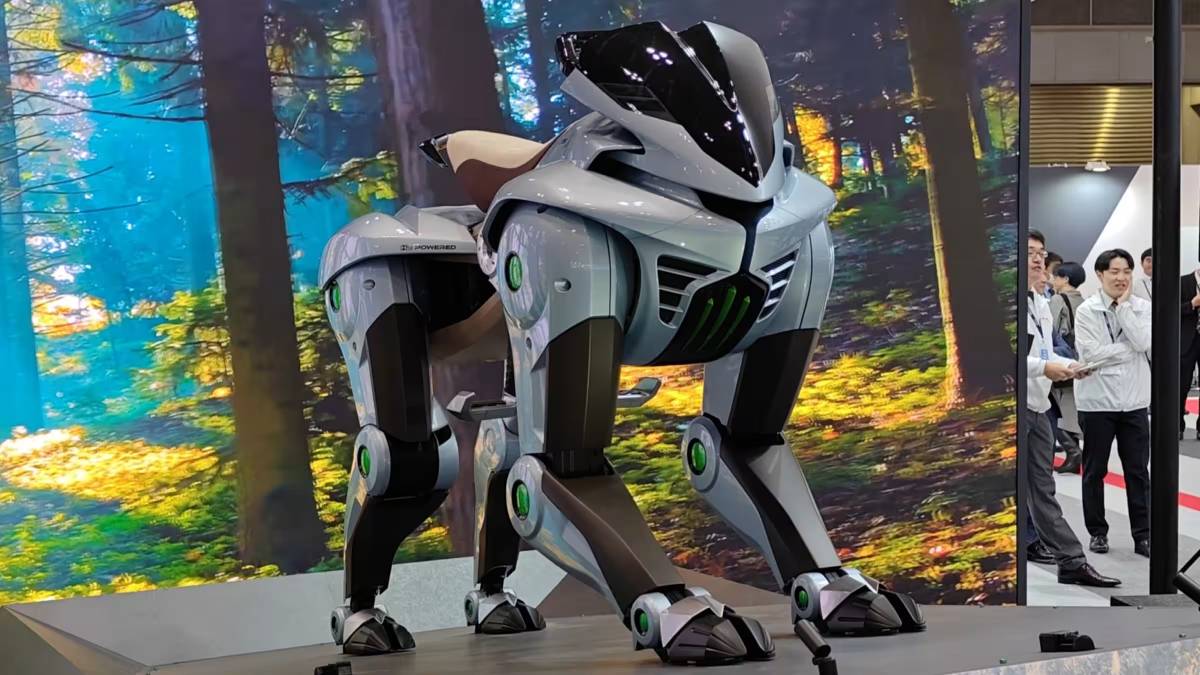
Investor attention turned sharply toward Japan’s industrial technology sector after shares of Kawasaki Heavy Industries climbed on plans for an AI collaboration with Nvidia. The proposed alliance reflects the growing integration of artificial intelligence into advanced manufacturing and robotics, with implications for global supply chains, industrial competitiveness, and long-term automation strategies.
Kawasaki Heavy’s stock gained momentum following reports of a planned partnership with Nvidia aimed at advancing AI-driven robotics and industrial automation systems. The collaboration is expected to combine Kawasaki’s expertise in heavy machinery and robotics with Nvidia’s AI computing platforms and semiconductor capabilities.
The initiative comes as manufacturers worldwide accelerate investments in smart factories, autonomous systems, and AI-enabled production infrastructure. Analysts view the move as strategically important for Japan’s industrial sector, particularly as labor shortages and geopolitical tensions push governments and corporations to strengthen domestic manufacturing resilience. The partnership also expands Nvidia’s influence in industrial AI, an area increasingly viewed as a high-growth segment beyond traditional cloud and consumer technology markets.
The partnership reflects a wider transformation underway across global manufacturing industries as companies race to integrate AI into operational systems. Industrial automation, robotics, predictive maintenance, and machine-learning-driven logistics are becoming central to competitiveness in sectors ranging from automotive production to aerospace and advanced engineering.
Japan has historically maintained a leadership position in robotics and precision manufacturing, but the country now faces mounting demographic and economic pressures. An aging workforce and declining labor pool have intensified the need for automation across industrial operations. As a result, Japanese corporations are increasingly partnering with global AI and semiconductor leaders to modernize production capabilities.
Nvidia’s growing presence in industrial technology represents another phase in its evolution from graphics-chip manufacturer to a dominant supplier of AI infrastructure. Its processors and software ecosystems are now widely used across autonomous vehicles, cloud computing, robotics, and scientific computing applications.
For Kawasaki Heavy, the collaboration signals a strategic effort to strengthen its role within next-generation manufacturing ecosystems where software, AI, and automation are becoming as critical as mechanical engineering expertise. The move also aligns with broader industrial policies across Asia, Europe, and North America aimed at securing technological leadership in advanced manufacturing.
Market analysts interpret the planned collaboration as further evidence that industrial AI is emerging as one of the next major battlegrounds in the global technology race. Experts note that while generative AI has dominated headlines, long-term commercial value may increasingly come from physical-world applications such as robotics, logistics, industrial mobility, and factory automation.
Industry observers also point to Japan’s demographic challenges as a powerful catalyst for automation investment. Executives across manufacturing sectors have repeatedly warned that labor shortages could significantly impact productivity and supply-chain efficiency unless companies accelerate adoption of intelligent automation technologies.
For Nvidia, analysts see the partnership as part of a broader strategy to diversify beyond data-center demand and position itself at the center of industrial AI infrastructure globally. The company has steadily expanded ties with automotive, robotics, and industrial engineering firms seeking advanced computing platforms capable of supporting real-time AI applications.
However, experts caution that scaling industrial AI systems remains complex. High deployment costs, cybersecurity concerns, workforce retraining needs, and uncertain regulatory standards could slow broader adoption despite strong investor enthusiasm surrounding AI-driven manufacturing.
For corporate leaders, the partnership reinforces the urgency of integrating AI into industrial operations to maintain competitiveness in increasingly automated global markets. Manufacturers may face pressure to accelerate investment in robotics, intelligent production systems, and advanced data-driven operational platforms.
Investors are likely to interpret the alliance as another positive signal for companies linked to industrial AI infrastructure, semiconductors, and robotics ecosystems. The move could also strengthen Japan’s position in advanced manufacturing at a time of rising global competition over AI leadership.
Policymakers may meanwhile increase focus on industrial digitization strategies, semiconductor supply security, and workforce adaptation programs. Governments are also expected to examine regulatory frameworks surrounding autonomous systems, industrial safety, and AI governance as deployment across factories and logistics networks expands.
Attention will now shift toward execution timelines and whether the Kawasaki-Nvidia partnership can deliver commercially scalable AI-powered industrial solutions. Markets will closely monitor adoption rates, productivity gains, and the broader competitive response from global manufacturing rivals.
The alliance highlights a larger structural shift reshaping industry worldwide: artificial intelligence is moving beyond software applications and becoming embedded directly into the machinery, infrastructure, and production systems driving the global economy.
Source: Bloomberg
Date: May 22, 2026


