



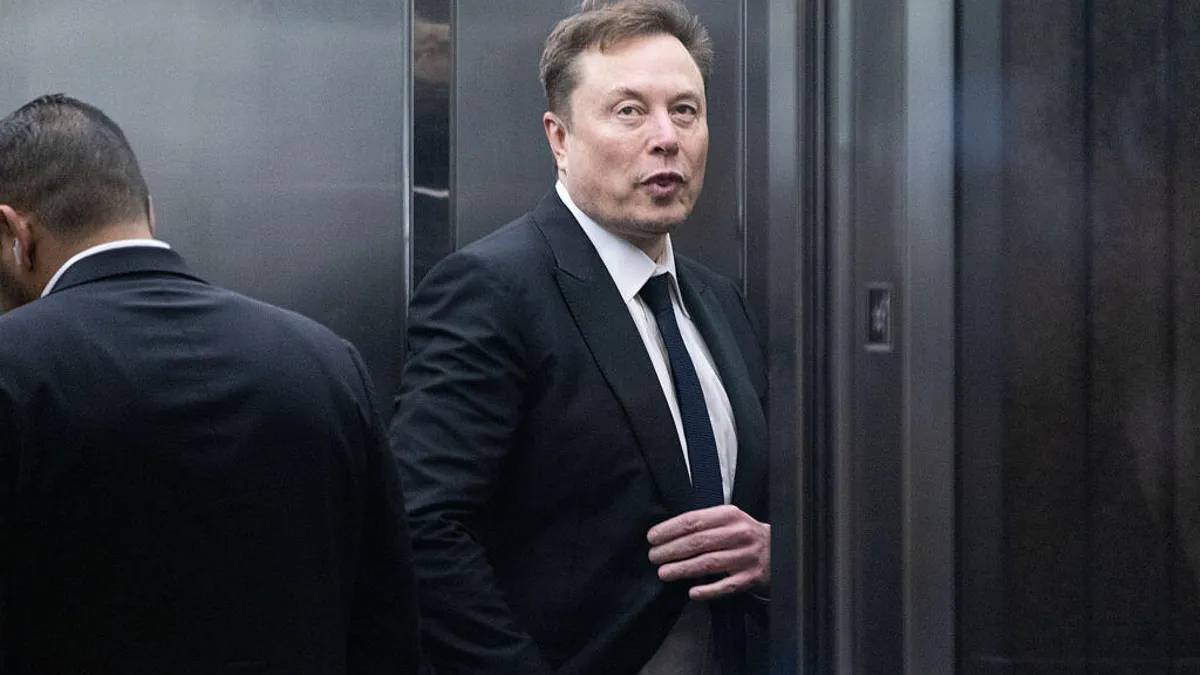
A legal ruling in favor of OpenAI and CEO Sam Altman in a dispute involving Elon Musk marks a pivotal moment for the AI company’s corporate trajectory. The outcome removes a significant legal overhang and strengthens speculation around a future IPO, with implications for AI governance, investor sentiment, and the broader technology sector.
The court decision reportedly sided with OpenAI in its ongoing legal confrontation with Elon Musk, resolving key disputes tied to the company’s structure and mission direction. The ruling is seen as reducing legal uncertainty that had shadowed the firm’s long-term governance model.
Major stakeholders include OpenAI leadership under Sam Altman, Elon Musk as a former co-founder and critic, and institutional partners aligned with OpenAI’s commercial expansion. The timing is critical, as AI companies continue to attract record investment inflows. Market observers interpret the decision as strengthening OpenAI’s position ahead of potential capital market activity, including a possible IPO roadmap.
The dispute between OpenAI and Elon Musk reflects deeper tensions in the AI sector regarding commercialization versus open research governance. OpenAI was originally founded as a nonprofit-oriented research lab, but has since evolved into a hybrid capped-profit structure to attract large-scale investment and compute resources.
This evolution has triggered debate among founders, regulators, and industry stakeholders about whether advanced AI systems should prioritize public interest safeguards or aggressive commercialization.
The case also unfolds against a broader backdrop of rapid AI sector consolidation, where firms such as OpenAI, Google DeepMind, and Anthropic are competing for compute infrastructure, enterprise adoption, and regulatory positioning.
Legal clarity in such high-profile disputes is increasingly viewed as a prerequisite for public-market readiness, especially as investors demand stronger governance frameworks before large-scale IPOs in frontier AI companies.
Legal analysts suggest that the ruling removes a structural uncertainty that had weighed on OpenAI’s strategic planning. By resolving governance-related disputes, the company gains greater flexibility in aligning its corporate structure with long-term capital market expectations.
Industry experts note that IPO readiness in the AI sector depends heavily on resolving founder conflicts, clarifying intellectual property control, and demonstrating regulatory resilience.
Technology market commentators argue that investor appetite for AI firms remains strong, but governance risk is becoming a key valuation factor. Any legal ambiguity involving founding figures is seen as a discounting factor in potential IPO pricing.
While official statements from involved parties emphasize operational continuity and mission alignment, analysts interpret the outcome as a strategic green light for accelerated commercialization planning.
For the AI industry, the ruling reinforces the importance of governance clarity as firms transition from private innovation labs to public market entities. Investors are likely to reassess risk profiles across competing AI platforms based on legal stability and leadership cohesion.
For businesses, a potential OpenAI IPO could reshape enterprise AI pricing dynamics and accelerate competition in foundation model deployment. Regulators may also intensify scrutiny of AI governance structures, particularly around nonprofit-to-profit transitions and market concentration. Analysts warn that the outcome could set precedent for how foundational AI companies balance mission-driven narratives with shareholder accountability in public markets.
Attention now shifts to OpenAI’s potential IPO timeline and how the company structures its governance framework ahead of public listing. Market participants will watch for regulatory filings, capital strategy announcements, and further clarification of investor rights. Uncertainty remains around valuation benchmarks and competitive responses from rival AI firms, making the next phase critical for the global AI investment landscape.
Source: CNET
Date: 19 May 2026


