
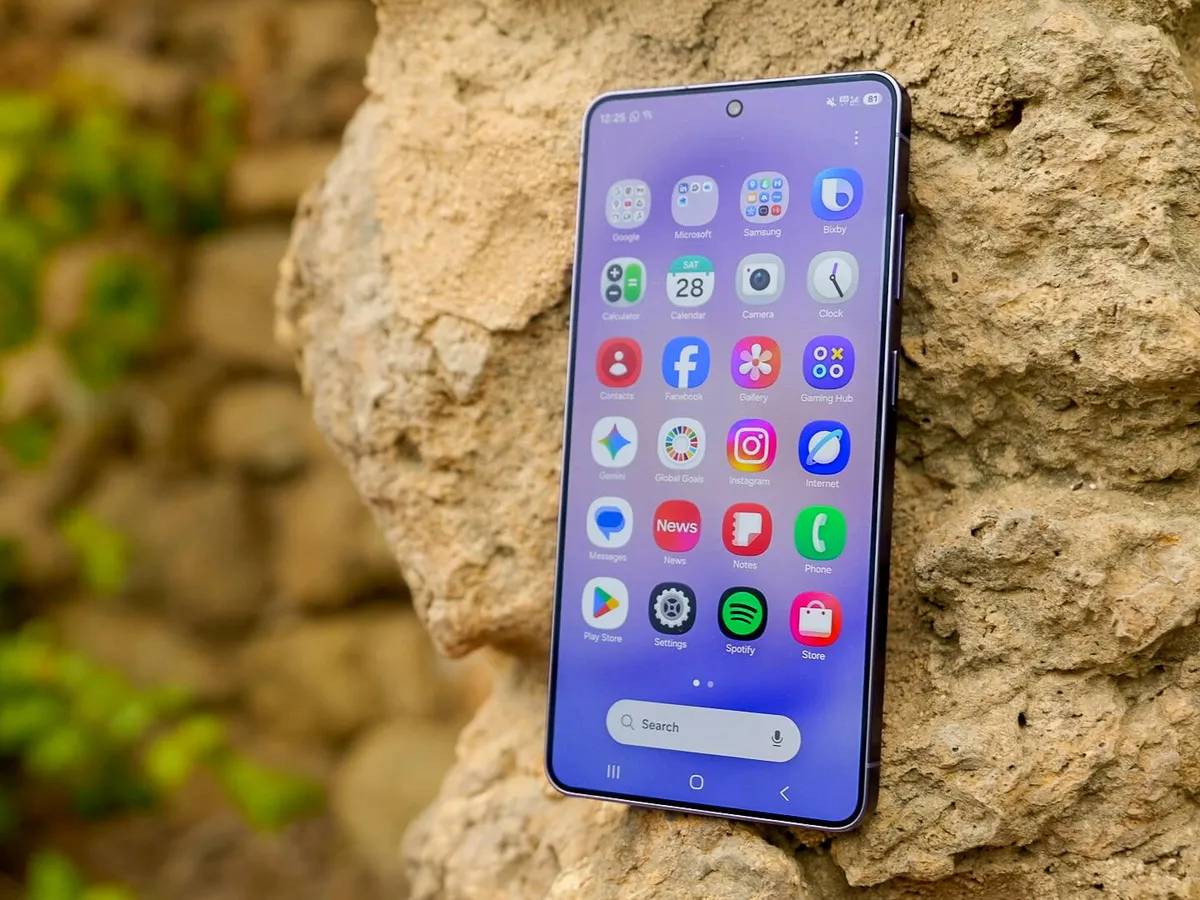
Samsung Galaxy S26 Ultra Privacy Display Shift

The review centers on Samsung’s Galaxy S26 Ultra, emphasizing its privacy display feature that limits screen visibility from side angles, enhancing data protection in public environments.

May 19, 2026
|
Image Source: CNET

The Galaxy S26 Ultra review highlights a strategic shift in premium smartphone design, where hardware innovation particularly privacy-focused display technology reasserts its importance amid AI-driven software dominance. The development underscores how device manufacturers are repositioning flagship hardware as a differentiator in an increasingly AI-saturated global mobile market.

The review centers on Samsung’s Galaxy S26 Ultra, emphasizing its privacy display feature that limits screen visibility from side angles, enhancing data protection in public environments. The device also integrates advanced AI features for photography, productivity, and system optimization.

Key stakeholders include Samsung Electronics, global component suppliers, and enterprise users prioritizing mobile security. The launch aligns with flagship refresh cycles in the premium smartphone segment.

Market impact is significant in the high-end Android ecosystem, where competition with Apple and emerging AI-native devices is intensifying. Analysts note that hardware differentiation is re-emerging as software convergence increases across platforms.

The smartphone industry has entered a phase where AI integration is becoming standard across operating systems, reducing differentiation based solely on software capabilities. As a result, hardware innovation is regaining strategic importance.

Privacy concerns have also intensified globally, particularly in enterprise and financial sectors where sensitive data exposure on mobile screens is a growing risk. Samsung’s focus on privacy display technology reflects broader demand for secure-by-design devices.

Historically, flagship smartphone competition revolved around camera quality, processor speed, and ecosystem lock-in. However, the current cycle is defined by AI acceleration, forcing manufacturers to seek new competitive dimensions.

The Galaxy S26 Ultra’s positioning suggests a return to tangible hardware value propositions, even as AI continues to dominate user experience layers across mobile ecosystems.

Industry analysts suggest that privacy-centric hardware features could become a key segmentation factor in premium devices, particularly for enterprise customers and government users. The integration of AI features alongside physical security enhancements is seen as a hybrid strategy to address both productivity and risk management needs.

Technology commentators note that as AI systems become more embedded in mobile operating systems, users may prioritize control over visibility, data exposure, and device-level security. Market researchers argue that Samsung is attempting to differentiate itself in a saturated flagship segment where incremental performance gains are no longer sufficient to drive upgrade cycles.

While official positioning emphasizes “user-centric innovation,” analysts interpret the strategy as a competitive response to Apple’s ecosystem dominance and the rise of AI-native device architectures.

For businesses, the Galaxy S26 Ultra reinforces the growing importance of mobile security in enterprise device procurement strategies. Privacy hardware features may influence IT policies around BYOD (bring your own device) environments and sensitive data handling.

For investors, differentiation in the premium smartphone segment could stabilize upgrade demand cycles, which have slowed in recent years. It may also reshape competitive dynamics among major OEMs.

From a policy perspective, increasing focus on privacy-oriented hardware may align with emerging data protection regulations globally. Governments may also encourage secure device standards in sectors handling sensitive information.

Analysts suggest that hardware-software convergence will increasingly define smartphone competitiveness in the AI era. Future smartphone innovation is expected to focus on hybrid architectures that combine AI-driven software intelligence with embedded privacy and security hardware. Manufacturers will likely compete on trust, data control, and enterprise-grade capabilities rather than performance alone. However, the sustainability of hardware-driven differentiation will depend on how quickly AI features commoditize across competing platforms.

Source: CNET
Date: 19 May 2026

  • Featured tools
Ai Fiesta
Paid

AI Fiesta is an all-in-one productivity platform that gives users access to multiple leading AI models through a single interface. It includes features like prompt enhancement, image generation, audio transcription and side-by-side model comparison.

#
Copywriting
#
Art Generator
Learn more
Writesonic AI
Free

Writesonic AI is a versatile AI writing platform designed for marketers, entrepreneurs, and content creators. It helps users create blog posts, ad copies, product descriptions, social media posts, and more with ease. With advanced AI models and user-friendly tools, Writesonic streamlines content production and saves time for busy professionals.

#
Copywriting
Learn more

Learn more about future of AI

Join 80,000+ Ai enthusiast getting weekly updates on exciting AI tools.
Thank you! Your submission has been received!
Oops! Something went wrong while submitting the form.

Samsung Galaxy S26 Ultra Privacy Display Shift

May 19, 2026

The review centers on Samsung’s Galaxy S26 Ultra, emphasizing its privacy display feature that limits screen visibility from side angles, enhancing data protection in public environments.

Image Source: CNET

The Galaxy S26 Ultra review highlights a strategic shift in premium smartphone design, where hardware innovation particularly privacy-focused display technology reasserts its importance amid AI-driven software dominance. The development underscores how device manufacturers are repositioning flagship hardware as a differentiator in an increasingly AI-saturated global mobile market.

The review centers on Samsung’s Galaxy S26 Ultra, emphasizing its privacy display feature that limits screen visibility from side angles, enhancing data protection in public environments. The device also integrates advanced AI features for photography, productivity, and system optimization.

Key stakeholders include Samsung Electronics, global component suppliers, and enterprise users prioritizing mobile security. The launch aligns with flagship refresh cycles in the premium smartphone segment.

Market impact is significant in the high-end Android ecosystem, where competition with Apple and emerging AI-native devices is intensifying. Analysts note that hardware differentiation is re-emerging as software convergence increases across platforms.

The smartphone industry has entered a phase where AI integration is becoming standard across operating systems, reducing differentiation based solely on software capabilities. As a result, hardware innovation is regaining strategic importance.

Privacy concerns have also intensified globally, particularly in enterprise and financial sectors where sensitive data exposure on mobile screens is a growing risk. Samsung’s focus on privacy display technology reflects broader demand for secure-by-design devices.

Historically, flagship smartphone competition revolved around camera quality, processor speed, and ecosystem lock-in. However, the current cycle is defined by AI acceleration, forcing manufacturers to seek new competitive dimensions.

The Galaxy S26 Ultra’s positioning suggests a return to tangible hardware value propositions, even as AI continues to dominate user experience layers across mobile ecosystems.

Industry analysts suggest that privacy-centric hardware features could become a key segmentation factor in premium devices, particularly for enterprise customers and government users. The integration of AI features alongside physical security enhancements is seen as a hybrid strategy to address both productivity and risk management needs.

Technology commentators note that as AI systems become more embedded in mobile operating systems, users may prioritize control over visibility, data exposure, and device-level security. Market researchers argue that Samsung is attempting to differentiate itself in a saturated flagship segment where incremental performance gains are no longer sufficient to drive upgrade cycles.

While official positioning emphasizes “user-centric innovation,” analysts interpret the strategy as a competitive response to Apple’s ecosystem dominance and the rise of AI-native device architectures.

For businesses, the Galaxy S26 Ultra reinforces the growing importance of mobile security in enterprise device procurement strategies. Privacy hardware features may influence IT policies around BYOD (bring your own device) environments and sensitive data handling.

For investors, differentiation in the premium smartphone segment could stabilize upgrade demand cycles, which have slowed in recent years. It may also reshape competitive dynamics among major OEMs.

From a policy perspective, increasing focus on privacy-oriented hardware may align with emerging data protection regulations globally. Governments may also encourage secure device standards in sectors handling sensitive information.

Analysts suggest that hardware-software convergence will increasingly define smartphone competitiveness in the AI era. Future smartphone innovation is expected to focus on hybrid architectures that combine AI-driven software intelligence with embedded privacy and security hardware. Manufacturers will likely compete on trust, data control, and enterprise-grade capabilities rather than performance alone. However, the sustainability of hardware-driven differentiation will depend on how quickly AI features commoditize across competing platforms.

Source: CNET
Date: 19 May 2026

Promote Your Tool

Copy Embed Code

Similar Blogs

May 19, 2026
|

AI Detection Crisis Raises Reliability Concerns

Recent analysis highlights that widely used AI detection systems often produce inconsistent and unreliable results, with false positives affecting legitimate human-written content.
Read more
May 19, 2026
|

LG Pushes Limits With 1000Hz Monitor

LG’s upcoming UltraGear model is expected to be the first commercially announced monitor reaching a 1000Hz refresh rate at Full HD resolution.
Read more
May 19, 2026
|

Google Android Update AI First Ecosystem

The Android update integrates Google’s Gemini AI across system-level functions, enabling contextual assistance, predictive actions, and multimodal interaction within smartphones.
Read more
May 19, 2026
|

Apple Siri Strategy Leans Google Gemini AI

Reports suggest Apple is exploring deep integration of Google’s Gemini AI to power a more advanced version of Siri in upcoming iOS releases.
Read more
May 19, 2026
|

Samsung Galaxy S26 Ultra Privacy Display Shift

The review centers on Samsung’s Galaxy S26 Ultra, emphasizing its privacy display feature that limits screen visibility from side angles, enhancing data protection in public environments.
Read more
May 19, 2026
|

OpenAI Wins Legal Battle Clears IPO Path

The court decision reportedly sided with OpenAI in its ongoing legal confrontation with Elon Musk, resolving key disputes tied to the company’s structure and mission direction.
Read more